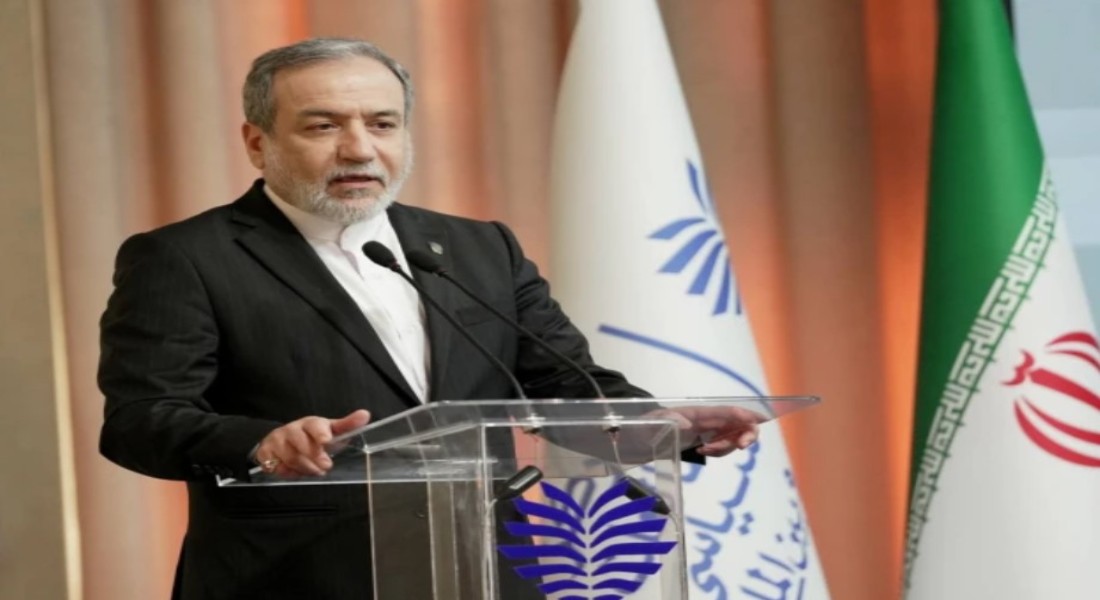
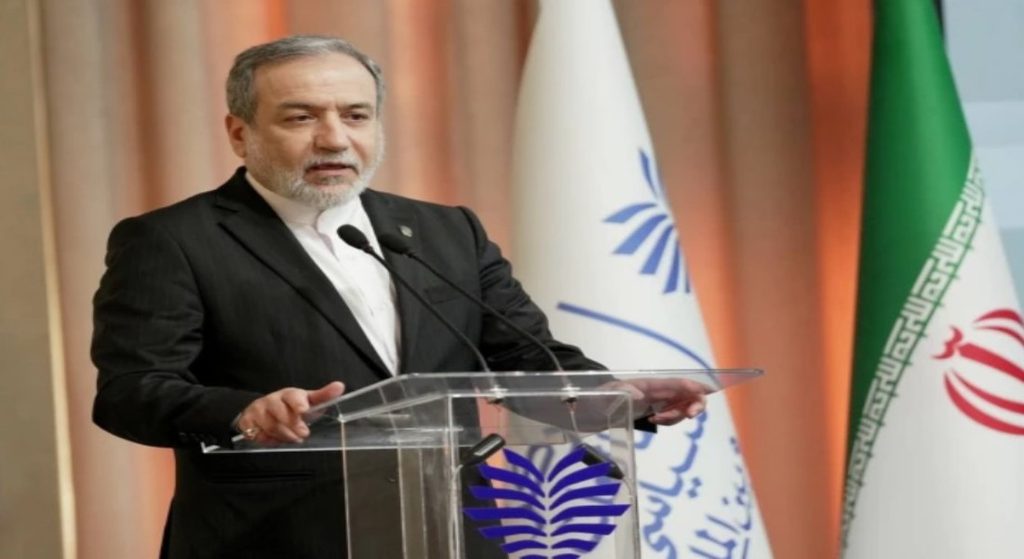
TEHRAN: Iran’s Foreign Minister Abbas Araghchi said on Sunday that Tehran was ready for “both defence and diplomacy.” He said the “ongoing and advancing” talks were aimed at continuing discussions with Qatari mediators.
Iranian negotiators were in Doha on Sunday for a third straight day of talks with Qatari mediators. The talks aim to reach a deal to end the United States-Israeli war on Iran, an official briefed on the discussions told Reuters.
Speaking to state media, Araghchi said talks on a “two-day proposal” were continuing, but no final decision had been made.
Qatari broadcaster Al Jazeera quoted Araghchi as saying on Saturday that Iranian and Qatari negotiators had prepared a proposal to reopen the Strait of Hormuz within two days of a possible agreement with Washington.
“We are doing our best in this process, and we hope there is good sense on the other side so they choose diplomacy over other options,” Araghchi said about the talks with Qatari officials.
Iran boosting military strength to respond ‘without geographical limits’: defence minister
Iran was quickly strengthening its armed forces so they could respond “without geographical limits,” Defence Minister Mehrdad Akhlaghi Ketabchi said on Sunday.
Speaking to reporters, Akhlaghi said Iran was firmly working to improve its forces’ ability to fight using advanced technology, following orders from Supreme Leader Mojtaba Khamenei.
“We are rapidly increasing our armed forces’ combat capabilities so they can respond without geographical limits,” he said.
Iran “will not be caught off guard or stopped, and any attack will receive an appropriate, strong and effective response,” he added.
Akhlaghi said Iran “would not be surprised by threats, stopped by pressure or rely on others’ approval to pursue scientific and technological progress.”
His comments came as Qatar and Pakistan continued efforts to restart talks between Washington and Tehran, amid reports of progress in indirect talks in Doha.
The talks aim to reach agreements on Iran’s nuclear programme, easing sanctions and safe travel through the Strait of Hormuz.
Iranian negotiators in Doha for more talks to end US-Iran war, official says
Iranian negotiators were in Doha on Sunday for a third straight day of talks with Qatari mediators. The talks aim to reach a deal to end the United States-Israeli war on Iran, an official briefed on the discussions told Reuters.
The talks are taking place amid fears the conflict could grow again after the November 3 US midterm elections. President Donald Trump has said the US will not launch new attacks on Iran before the election and that talks with Tehran are going well. However, he has not ruled out further military action afterward.
Iran has repeatedly said it would respond to any new attacks by striking US and Israeli targets in nearby countries. The eight-month-old war continues to disrupt global oil supplies and spread across the Middle East.
Iran’s Supreme Leader Ayatollah Mojtaba Khamenei issued a statement on Saturday telling the armed forces to be ready for any attack. The Iranian military later said it was taking steps to improve its readiness.
US Secretary of State Marco Rubio said on Saturday that Trump had not decided whether to launch new attacks on Iran, but preferred to end the conflict through diplomacy.
Qatari mediators were in Tehran on Friday to meet Iranian officials before moving the talks to Doha on Saturday, an official had told Reuters. The official said the talks were being arranged through regular contact with Washington.
Trump says US could strike Iran’s remaining nuclear sites in ‘10 minutes’
US President Donald Trump said on Saturday that Washington could attack Iran’s remaining suspected nuclear sites in “10 minutes.” His comments suggested the US could take further military action despite ongoing peace talks.
Speaking to reporters at his Mar-a-Lago home in Florida, Trump said US military action had badly weakened Iran’s armed forces and nuclear facilities, leaving only a few sites to target.
“We still have to take care of, I would say, one or two sites, but we can do that in 10 minutes. So, we have that plan,” Trump said. He mentioned Pickaxe Mountain, a suspected Iranian nuclear facility, adding: “We can do that all very quickly.”
Trump was asked whether there was a timeline for the Qatar-led talks between Washington and Tehran.
He said the US was in no hurry to reach an agreement. He also claimed US military action had destroyed much of Iran’s navy, air force, air defences, military equipment and nuclear facilities.
Asked if the US could restart military action against Iran as soon as this week, Trump did not give a direct answer. “Why would you ask such a stupid question?” he said, then added: “I can’t tell you.”
Trump again said the US would not allow Iran to get nuclear weapons. “Iran will never have a nuclear weapon. They want to make a deal; we’ll find out about that,” he said.
Trump said talks were progressing but questioned whether Tehran could be trusted. “They’re going fine, but they’re not very reliable. I will tell you, they make a deal and then they back out. They want to make a deal. We’ll see if they make a deal,” he said.
Iran on Sunday labelled Britain’s Royal Navy and Royal Air Force as “terrorist” organisations and called its foreign intelligence agency MI6 a “hostile group,” according to Iran’s Foreign Ministry.
In a statement carried by state-run news agency IRNA, the ministry said the move was in response to Britain’s “harmful” actions, especially its decision to label Iran’s Islamic Revolutionary Guard Corps (IRGC) a “terrorist organisation.”
The ministry said the decision followed a resolution by Iran’s Supreme National Security Council. It also followed Britain’s decision to list the IRGC under the State Threats Act 2026 on July 13.
Tehran also accused Britain of taking part in the US-Israeli war against Iran by allowing the use of military and support bases and facilities under British control.
IRGC Deputy for Political Affairs Brigadier-General Yadollah Javani said Iran’s military was “fully prepared for any scenario the enemy may devise.” He said Iranian forces were acting on the assumption that the US or Israel could attack at any time, Al Jazeera reported.
Tv reporter told Iran’s Fars News Agency that Tehran would not be caught off guard and would respond as needed.
He also said Iran’s military could defend against its enemies and carry out early or offensive attacks.
According to TV report, Javani said Iran could launch heavy attacks on US warships. He warned that any area enemy forces entered by air or across a border would become a “killing ground” for them.
Iranian army spokesperson Brigadier General Mohammad Akraminia separately warned that any new US attack would receive an “immediate, decisive” response on a larger scale than before .
The spokesperson added that if a new war began, it would not be limited to West Asia
The report said the Saudi-led coalition fighting the Houthis carried out the strikes on an oil facility in Bajil district, in western Hodeidah province. At least three civilians were injured.
Tensions in the Middle East have remained high since the US and Israel attacked Iran on February 28, leading to Iranian attacks across the region.
Diplomatic efforts followed, and Washington and Tehran signed a memorandum in June. However, tensions have continued over security arrangements and travel through the Strait of Hormuz.
Reported By: Our Correspondent Reporter