
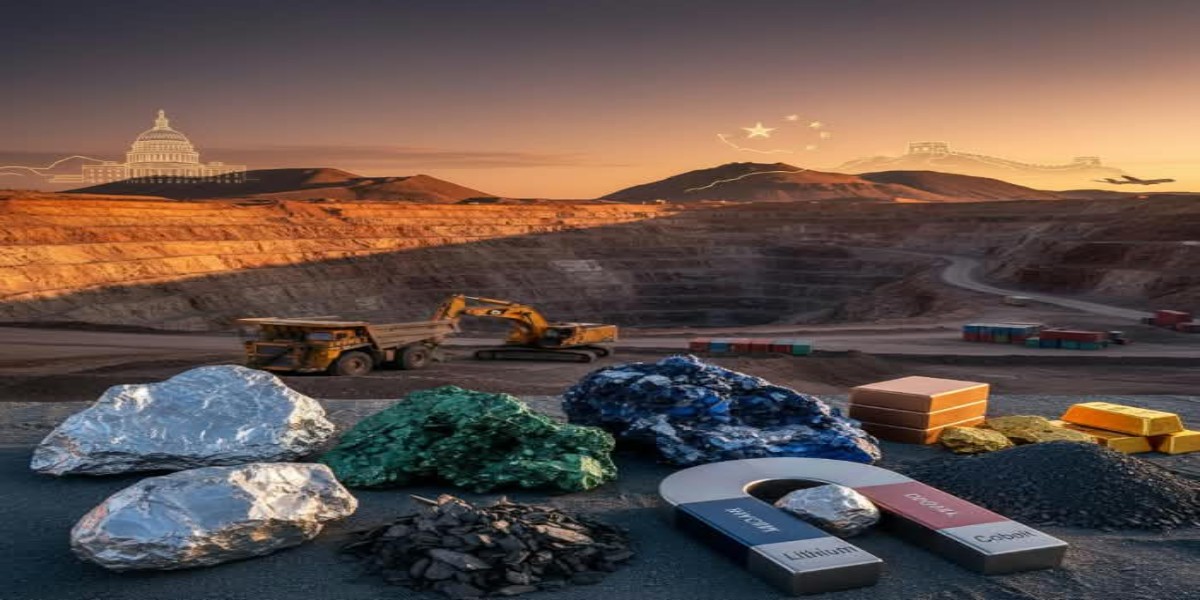
LAHORE:The global transition towards cleaner energy is increasing the strategic importance of critical minerals, including lithium, copper and nickel, which are essential for electric vehicles, battery storage, renewable energy systems and modern electricity networks
.According to the International Energy Agency’s Global Critical Minerals Outlook 2026, demand for critical minerals is expected to continue growing strongly as countries expand electric mobility, renewable energy and electricity infrastructure.
The IEA projects that, under its Stated Policies Scenario, demand for critical minerals will nearly double by 2040 compared with current levels
. Lithium demand is projected to more than triple, while demand for nickel, graphite and rare earth elements is also expected to rise substantially.Copper and Lithium Supply Remain Important ChallengesCopper plays a central role in electricity networks, power cables and other technologies required for electrification.
The IEA estimates that, based on existing and announced projects, a supply gap equivalent to around 25 per cent of projected copper supply requirements could emerge by 2035 under its base-case assessment.Lithium is another key material because of its role in rechargeable batteries used in electric vehicles and energy storage systems.
Although the IEA says the projected supply outlook has improved, the pipeline of announced projects still points to potential supply shortfalls for both copper and lithium.These challenges highlight the importance of investment in mining, processing, refining and recycling.Critical mineral production and processing are concentrated in a limited number of countries
. According to the IEA, Indonesia accounts for a leading share of nickel refining, while China dominates the refining of several other important energy minerals.Such concentration can expose industries to trade restrictions, geopolitical tensions, production disruptions and sudden price changes.
The IEA’s 2026 outlook therefore highlights the need to diversify supply chains and strengthen the capacity of countries to process minerals and manufacture materials needed for clean energy technologies.For mineral-rich developing countries, growing demand offers opportunities to attract investment, create employment and expand domestic industries.
However, economic benefits depend on more than extracting raw materials. Developing processing and refining capacity, improving infrastructure, training skilled workers and enforcing environmental protections can help countries capture more value from their resources
.Recycling can also reduce pressure on newly mined resources while supporting more resilient supply chains. Achieving this will require investment in collection systems, recycling facilities and technologies capable of recovering valuable materials from used batteries and other products.
As the clean energy transition advances, critical minerals are becoming an increasingly important part of energy security and industrial policy. Ensuring reliable supplies while supporting responsible mining, environmental protection and economic development will remain a major challenge for governments and industry.
Source
Report by: Mirza Maqbool Baig I LAHORE