
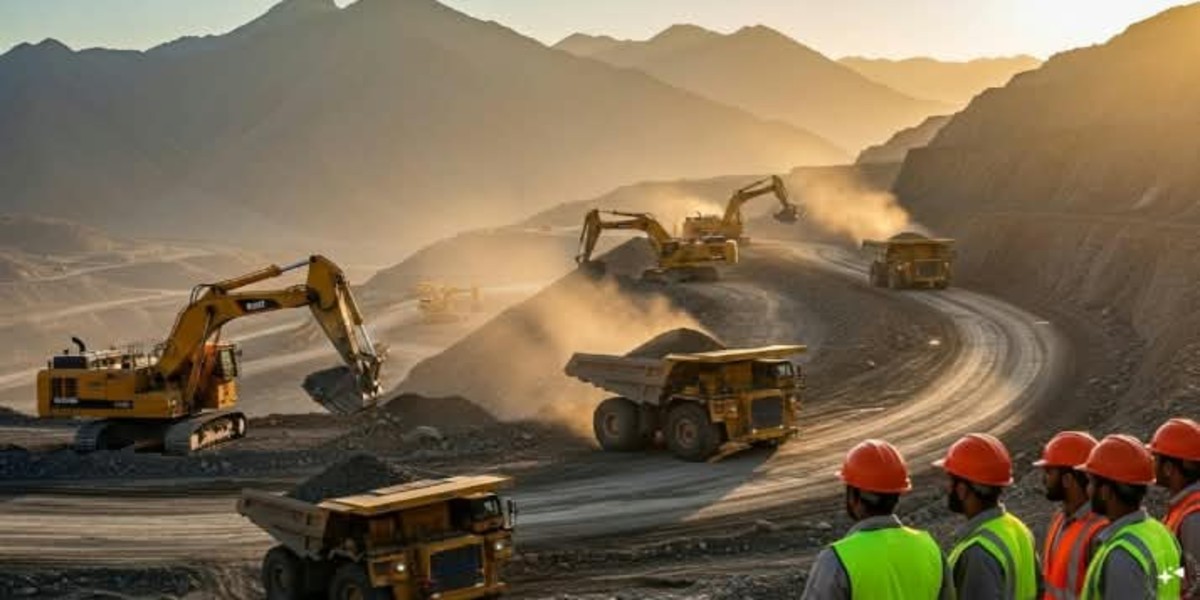
LAHORE: Pakistan’s Reko Diq copper-gold project in Balochistan holds significant potential to attract foreign investment, strengthen the country’s mineral sector and create employment opportunities. However, the project’s development timeline and investment requirements remain under review amid security concerns.
Located in Chagai district, Reko Diq is considered one of the world’s largest undeveloped copper-gold projects. The development is led by Barrick Mining Corporation in partnership with Pakistani federal and provincial stakeholders.According to Barrick, ownership is divided among the company, which holds a 50 per cent stake; the Government of Balochistan, which holds 25 per cent; and three Pakistani state-owned enterprises, which collectively hold the remaining 25 per cent.
The project is expected to contribute to Pakistan’s efforts to develop its mineral resources, diversify economic activity and attract international investment.Copper is an important industrial metal used in electricity networks, renewable energy systems, electric vehicles and digital infrastructure.
Gold also has significant commercial value, making copper-gold deposits strategically important for mining companies and resource-producing countries.The Reko Diq project is planned to be developed in two phases, with a combined processing capacity of 90 million tonnes of ore annually once both phases are operational.
The development could support employment, local procurement, infrastructure investment and the growth of related industries in Balochistan.In an update issued on April 2, 2026, Barrick said it would slow development activity and extend its review of the project until mid-2027 following an escalation in security risks and incidents in Pakistan and the wider region.
The company said the review would assess security conditions, capital requirements, project financing, scope and scheduling.
Barrick also warned that the project could face significant increases in its previously disclosed capital budget and timeline. Its earlier estimates placed Phase 1 capital costs at US$5.6 billion to US$6.0 billion and Phase 2 costs at US$3.3 billion to US$3.6 billion, excluding capitalised financing costs.
First production had previously been targeted for the end of 2028, but the extended review means that the schedule and overall costs may change.The project has the potential to create construction and long-term employment, while supporting training, local businesses and social development programmes.
However, the scale of these benefits will depend on the project’s progress, financing, security arrangements and implementation of commitments to local communities.Environmental management and access to water are also important considerations in the arid Chagai region. Transparent monitoring, meaningful community consultation and responsible use of natural resources will be essential to ensuring that mining development delivers lasting benefits.
Reko Diq represents a major opportunity for Pakistan to expand its mining sector and participate more actively in international critical-mineral supply chains.Realising that potential will require stable project financing, effective security arrangements, environmental safeguards and equitable distribution of economic benefits.As Barrick continues its review, the project’s future timeline and investment costs will remain important factors for Pakistan’s mineral development strategy.
Sources.
Report by: Mirza Maqbool Baig I LAHORE