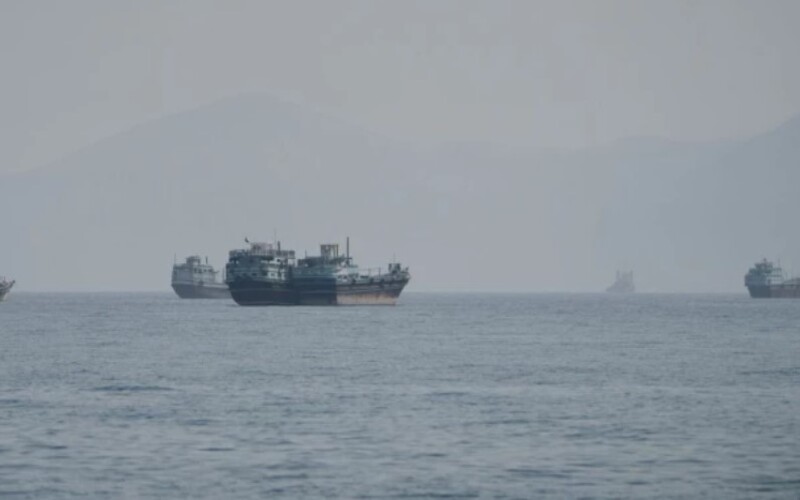
TEHRAN: Iran said on Saturday it was waiting for an official response from the United States to a proposal aimed at reopening the Strait of Hormuz and ending fighting across the Middle East.
The Wall Street Journal reported that US President Donald Trump had rejected the proposal. Reuters said it could not immediately confirm the report.
Iran presented the plan at the United Nations in New York. It said the proposal had been sent to the US through Qatari mediators. Iran’s foreign minister, Abbas Araghchi, said that if the US agreed, the Strait of Hormuz could reopen and fighting across the region could pause within seven days. Wider talks could then begin.
The plan would also require the US to lift its blockade on Iranian ports, release frozen Iranian funds and remove oil sanctions. Iran says it would not make concessions on its nuclear program, including its right to enrich uranium or keep its highly enriched uranium inside the country.
A US official had earlier described talks through mediators as “positive and constructive.” But the Wall Street Journal reported that Trump doubted Iran would meet his demands and had told staff that renewed bombing was likely.
Iran says it will keep fighting until demands are met
An Islamic Revolutionary Guard Corps spokesperson said Iran would continue to punish the US until seven Iranian conditions were met. He said Iran had won the war and was turning that victory into lasting deterrence.
He also said the US had failed to keep the Strait of Hormuz open, despite having the world’s largest navy.
Bahrain rejected any system requiring permits or fees to pass through the strait. It said passage through the international waterway should not be stopped or controlled by one country’s rules.
Saudi Arabia and its partners strengthen security
The conflict, which began with US and Israeli attacks on Iran on February 28, has caused thousands of deaths and damaged Iran’s economy. Fighting and attacks have spread across the region.
Iran and its allies have attacked US partners in the Gulf. The Houthis in Yemen have also attacked Saudi interests, including cities, energy sites and shipping. These attacks have added to concerns about global oil supplies, especially while traffic through the Strait of Hormuz is heavily disrupted.
Iran’s foreign ministry said Araghchi had spoken with Saudi Foreign Minister Prince Faisal bin Farhan about a plan between Iran and Oman for safe shipping routes through the strait.
Saudi Arabia’s coalition said it intercepted two Houthi drones heading toward Riyadh and a ballistic missile aimed at Khamis Mushait.
Defence officials from Turkey and Pakistan met in Riyadh to discuss security, intelligence sharing and military cooperation. The meeting followed talks between the three countries’ foreign ministers under a joint defence agreement.
The United Nations children’s agency said fighting in Yemen had worsened the humanitarian crisis, with more children suffering from severe malnutrition.
Iran’s president says trust must be rebuilt
Iranian President Masoud Pezeshkian said Iran was open to resolving its dispute with Washington but that trust needed to be rebuilt.
In an interview with CBS News, he said the US must follow what it had agreed to and show that it did not intend to overthrow Iran’s government. He questioned whether Washington genuinely wanted a settlement, pointing to US and Israeli attacks during negotiations and the killing of Iranian officials, scientists and civilians.
Pezeshkian said he hoped for peace in the region and called on the US to stop supporting Israel. He also said Iran would allow UN nuclear inspectors into the country if the US accepted Iran’s proposal and nuclear talks resumed.
Fighting continues in Yemen
Yemeni government forces said they had attacked Houthi positions and supply routes in Taiz province. A military spokesperson released video that he said showed the strikes but gave no information about casualties or damage.
A Houthi spokesperson said Saudi warplanes had carried out 14 airstrikes and a missile attack in several Yemeni provinces.
Yemen has been at war since the Houthis took the capital, Sanaa, in 2014. A Saudi-led coalition intervened the following year to support Yemen’s internationally recognised government. Fighting increased again in July after the Houthis announced a maritime blockade against Riyadh.
Iran says it will not give up its nuclear rights
A senior Iranian official told Reuters that Iran would not change its position on its nuclear program, even if the US accepted the proposal to reopen the Strait of Hormuz. The official said the strait would stay closed until Iran’s conditions were met.
Iran says it is willing to discuss its nuclear program after the US meets those conditions. But it will not agree to give up uranium enrichment or send its highly enriched uranium out of the country.
The US, Israel and other Western countries have accused Iran of seeking nuclear weapons. Iran denies this. The International Atomic Energy Agency estimated that Iran had 440.9 kilograms of uranium enriched to 60% before US and Israeli attacks on Iranian nuclear sites in June 2025. It is not clear how much remains.
Iranian officials have said the country might agree to dilute its most highly enriched uranium, but not send it abroad.
Reported By: News Agency Reporter