
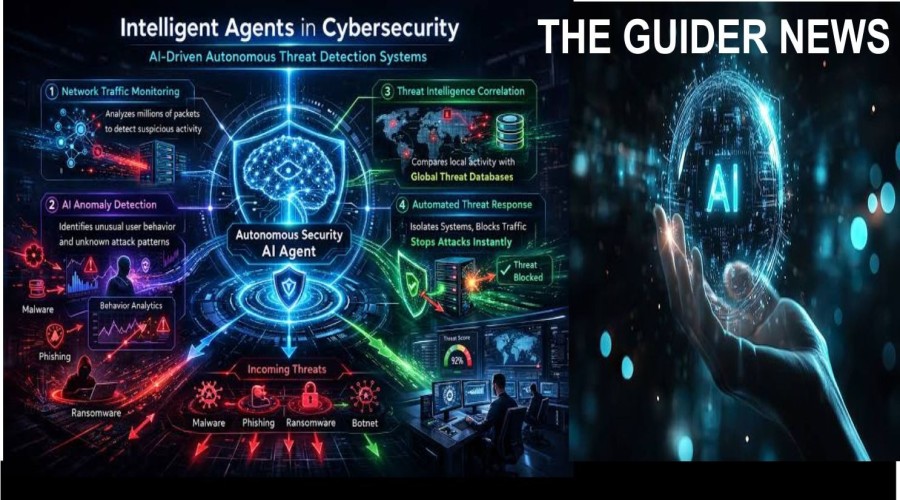
ISALAMABAD: The rapid development of artificial intelligence is changing the cybersecurity landscape, with agentic AI emerging as one of the technologies that could significantly alter how digital systems are operated and defended.
Agentic AI systems are designed to understand context, formulate plans and take actions with a degree of independence. These capabilities can create opportunities for productivity and automation, but they also introduce security questions when AI systems are connected to sensitive information, software tools, cloud environments or business processes.
Singapore’s Cyber Security Agency has identified the security implications of agentic and frontier AI as an important emerging issue. In June 2026, CSA released an addendum to its guidelines on securing AI systems for public consultation. The agency said agentic AI has greater potential impact because of its ability to act independently and its possible access to tools and data.
The development of these systems is taking place alongside a broader acceleration in the cyber threat environment. CSA’s Singapore Cyber Landscape 2025/2026 report said the threat environment has been characterised by increasing complexity, speed, scale and sophistication. The report identified artificial intelligence and the growing interdependence of modern supply chains as important drivers.
One concern is the speed at which AI can assist with vulnerability discovery and other stages of cyber operations. In an April 2026 advisory, CSA said frontier AI models can demonstrate capabilities in software analysis, vulnerability discovery and security reasoning. The agency noted that these capabilities may reduce the time needed to identify vulnerabilities and engineer exploits, potentially compressing processes that once took much longer.
This creates a difficult security environment for organisations. Traditional cybersecurity processes often depend on identifying vulnerabilities, assessing their severity, applying patches and monitoring systems. If attackers can use advanced AI to accelerate parts of this process, defenders may have less time to respond.
At the same time, AI can also become part of the defensive response. Organisations can use automated systems to analyse large volumes of security information, identify unusual activity, support incident response and improve the speed of detection. The challenge is ensuring that defensive AI systems themselves are secure, reliable and properly governed.
The question of human oversight is particularly important when AI systems can take actions independently. An automated system that has access to business applications, databases or security controls could potentially create consequences if it makes an incorrect decision or if an attacker manipulates the system.
This is why secure AI development increasingly involves more than protecting the underlying software. Organisations also need to consider who can access an AI system, what data it can use, which tools it can control, how its decisions are monitored and how quickly human operators can intervene.
Singapore has been strengthening its cybersecurity framework alongside these technological developments. In July 2026, CSA announced an updated Cybersecurity Code of Practice for Critical Information Infrastructure. The agency said the update addresses changes in the threat landscape, including advanced persistent threats and AI-enabled threats.
The focus on critical infrastructure is especially important because digital and operational systems are increasingly interconnected. Essential services can depend on networks, cloud platforms, suppliers and industrial control systems. A cyber incident affecting one part of an interconnected environment can create wider operational and economic consequences.
The subject is expected to feature prominently during Singapore International Cyber Week 2026, which will be held from 12 to 15 October under the theme “Cyber at a Crossroads: Shaping the New Cyber Order.” The theme reflects the wider transformation taking place in cyberspace as AI capabilities grow and digital systems become more interconnected.
GovWare 2026, a major component of SICW, will also examine cybersecurity at the speed of agentic technology. Its theme, “Anchored in Unchanging Principles: Cyber at Agentic Velocity,” highlights governance, accountability, trust and human oversight while addressing rapid technological change.
For organisations adopting AI, the emerging lesson is that security cannot be treated as a final stage after deployment. Security controls, access management, monitoring, testing and human oversight need to be considered throughout the AI lifecycle.
The discussion around agentic AI is therefore not simply about predicting future risks. It is also about establishing practical safeguards now. As AI systems become more capable and autonomous, organisations will need to determine where automation is appropriate, where human approval remains necessary and how responsibility can be maintained when AI participates in important decisions or actions.
 Reported By: Mirza Maqbool Baig I Islamabad