
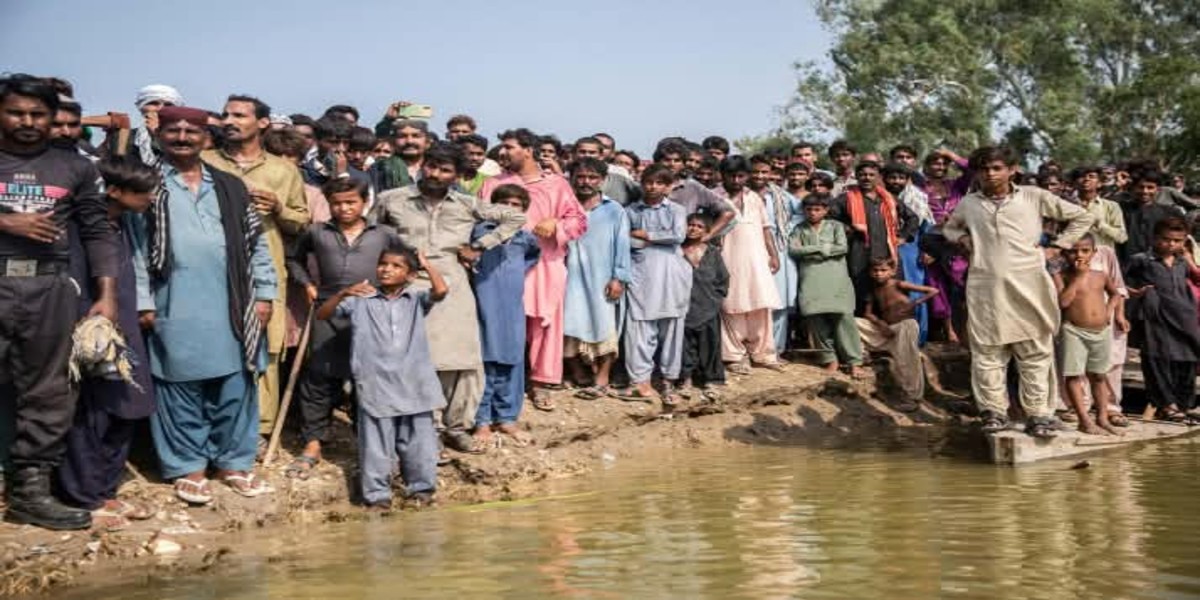
LAHORE: Pakistan’s growing exposure to floods, extreme heat, water shortages and other climate-related hazards is placing increasing pressure on vulnerable communities, threatening livelihoods, food security and access to essential services.
Although Pakistan contributes a relatively small share of global greenhouse gas emissions, its geographic conditions, dependence on climate-sensitive agriculture and limited resources for disaster recovery leave many communities exposed to climate-related risks.
The 2025 monsoon floods demonstrated the scale of this vulnerability. According to the Government of Pakistan’s Economic Survey 2025–26, the floods caused estimated damages of Rs822 billion, claimed more than 1,039 lives and displaced over four million people.
Approximately 6.5 million people were affected across 70 districts, with Punjab accounting for the largest share of reported economic losses.
These figures highlight the continuing challenge of protecting communities while rebuilding homes, infrastructure and livelihoods after extreme weather events.
Flooding can have consequences that extend well beyond the immediate emergency. Families may lose homes, livestock, crops, household possessions and sources of income.
Damaged roads and bridges can interrupt access to schools, health facilities and markets, while contaminated water supplies can increase public health risks.
The Food and Agriculture Organization of the United Nations published a geospatial assessment of Pakistan’s 2025 monsoon floods in March 2026. Its analysis estimated that approximately 17,304 square kilometres of land were inundated across Punjab, Sindh and Khyber Pakhtunkhwa during the assessed periods.
The assessment found that about 14,498 square kilometres of agricultural land were affected. Rice and cotton were among the crops impacted, creating additional challenges for farmers and agricultural supply chains.
For small-scale farmers and daily-wage workers, the loss of productive land and employment can reduce household income long after floodwaters recede.
The effects of climate-related disasters are not distributed equally. Low-income households often have fewer savings, limited access to insurance and fewer resources to rebuild damaged homes or businesses.
Women, children, older people, persons with disabilities and communities in remote areas may face additional barriers to evacuation, healthcare, safe drinking water and emergency assistance.
Displacement can also interrupt children’s education and place additional financial and social pressure on families. In rural areas, damage to crops and livestock can undermine food security and increase the difficulty of recovering economically.
Climate adaptation therefore requires not only emergency relief but also long-term support that helps affected households restore their livelihoods and reduce their exposure to future disasters.
Early Warning Systems and Preparedness
Pakistan has taken steps to strengthen disaster preparedness, but translating forecasts into timely action at the community level remains important.
A UNESCO assessment of Pakistan’s flood early warning system, published in July 2026, identified areas for improvement, including last-mile warning delivery, locally understandable alerts, coordination between institutions and community preparedness.
Warnings are most effective when residents receive them in time, understand the risks and know what action to take. Reliable communication systems, evacuation routes, local emergency teams and accessible shelters can help communities respond more effectively.
Improving coordination among meteorological services, disaster management authorities, provincial administrations and local organisations is essential to ensuring that warnings lead to practical action.
Pakistan also faces longer-term challenges involving water availability, glacial melt, heatwaves and changing rainfall patterns. These risks can affect agriculture, urban water supplies, energy production and public health.
In September 2026, UN-Habitat reported progress under a community-level climate adaptation project involving the installation of 5,000 household rainwater-harvesting units in Rawalpindi and Nowshera. The units provide a combined storage capacity of approximately 7.86 million litres.
The initiative illustrates how locally appropriate measures can help households manage water scarcity and strengthen resilience. However, sustained adaptation will require investment in drainage, flood protection, water conservation, climate-resilient infrastructure and public awareness.
Reconstruction following major floods places additional pressure on public finances. Governments must balance immediate relief with investments that reduce future disaster risks.
Climate-resilient housing, stronger roads and bridges, improved irrigation systems and better protection for schools and health facilities can help limit the impact of future extreme weather events.
International cooperation also remains important. Climate finance, technical assistance and access to early-warning technology can help Pakistan strengthen adaptation measures, particularly in communities with limited resources.
Effective funding should reach the people most exposed to climate risks, with transparent project monitoring and meaningful community participation.
Pakistan’s experience demonstrates the importance of connecting climate policy with the everyday needs of vulnerable communities. Disaster preparedness, resilient infrastructure, water security and sustainable livelihoods must be treated as complementary priorities.
Local authorities, national institutions, development partners and communities all have a role in reducing risks and improving recovery after disasters.As climate-related hazards continue to challenge development, investment in early warnings, community preparedness and long-term adaptation can help protect lives and reduce economic losses.
For Pakistan, climate resilience is not simply an environmental objective. It is also essential to protecting livelihoods, reducing poverty and ensuring that vulnerable communities have a stronger capacity to withstand future shocks
Report by: Mirza Maqbool Baig I LAHORE