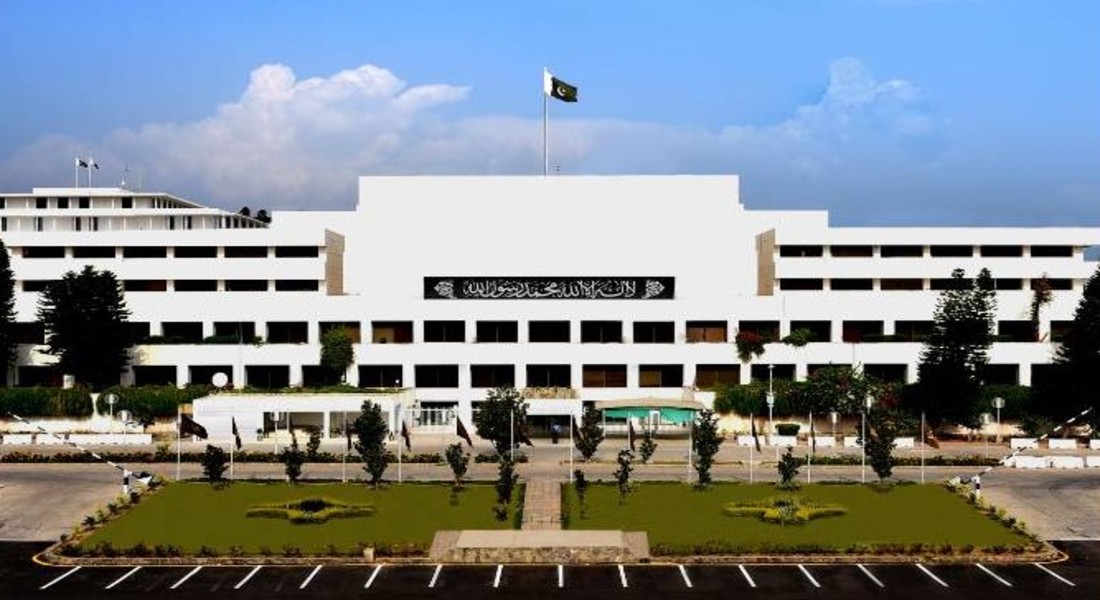
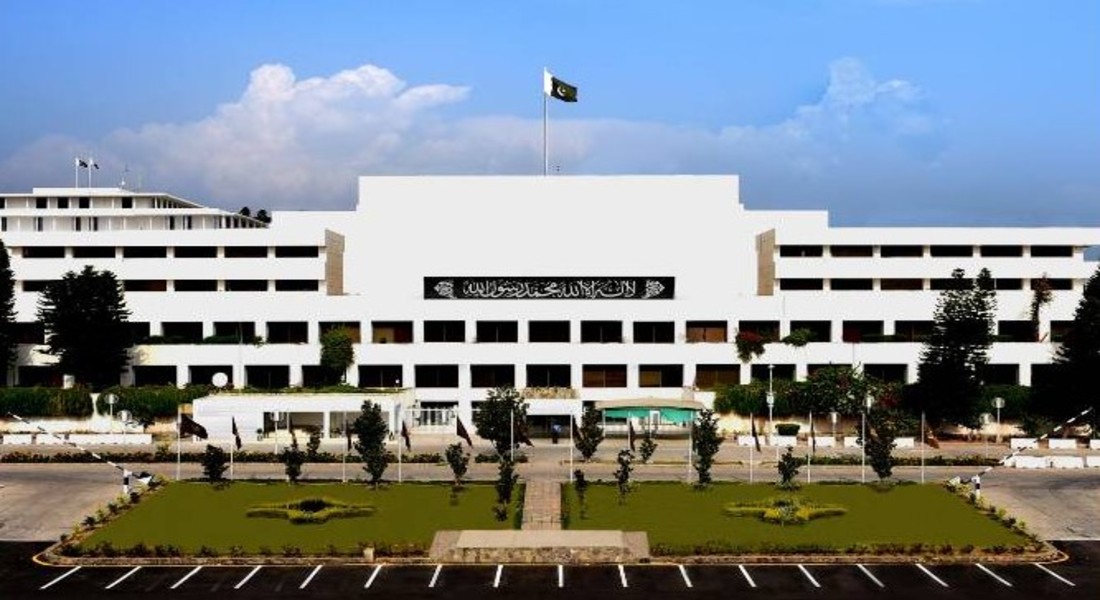
LAHORE: The Lower House of Parliament, the National Assembly, passed four government bills by majority vote on Friday after reviewing them clause by clause.
The bills were the Higher Education Commission (Amendment) Bill, 2026; the NFC Institute of Engineering and Technology Multan (Amendment) Bill, 2026; the National Textile University (Amendment) Bill, 2026; and the National Rahmatul-Lil-Aalameen Wa Khatamun Nabiyyin Authority (Amendment) Bill, 2026.
The House was told that the situation in the Middle East had affected gas supplies. As a result, two urea plants in Pakistan were temporarily closed. This caused a shortage of more than 200,000 tons of fertilizer and led to supply problems in the market.
During Question Hour, Parliamentary Secretary Shaista Khan said crop production depends on fertilizer supplies. So, changes in fertilizer prices and supply are a concern for the government. Pakistan is also importing fertilizer to meet its needs, with about 50% coming from abroad. Fertilizer prices have also risen in the international market because of the Middle East crisis.
She said the Ministry of National Food Security and Research puts farmers’ needs first. The government is starting different projects to help farmers, including easy loans to cover farming costs.
In response to a follow-up question, the Parliamentary Secretary said the minister had taken action over reports that wheat was mixed with sand and soil in Khyber Pakhtunkhwa. Plans had also been made to take action against those supplying poor-quality wheat.
She said the National Agricultural Research Centre (NARC) was developing and studying new types of seeds. Researchers are working on wheat seeds that can grow with less water and cope with climate change. This will help Pakistan’s farmers deal with changing weather.
Project to fight fake medicines
The National Assembly was told that the government has planned a project to fight fake medicines.
Minister for National Health Services Mustafa Kamal said during Question Hour that the Prime Minister is expected to officially launch the project by the end of November. It will allow people to scan a medicine’s 2D barcode with a mobile phone at a pharmacy to check if it is genuine.
The system will also show whether the medicine’s price is approved and when it expires.
Mustafa Kamal said the system would help the Drug Regulatory Authority of Pakistan (DRAP) take action against people who make or sell fake medicines.
He also said the government is working to produce vaccines in Pakistan and reduce the need to buy them from other countries.
Railways goes digital
Minister for Railways Hanif Abbasi said Pakistan Railways is becoming more digital. It has updated its booking system by introducing online and electronic ticketing through the Railways Automated Booking and Travel Assistance (RABTA) mobile app.
Passengers can check timetables, see if seats are available and buy tickets online without visiting a booking office.
Wheat distribution
The National Assembly was told that after the closure of the Pakistan Agricultural Storage and Services Corporation (PASSCO), letters had been sent to government agencies and provinces to arrange the distribution of available wheat. Wheat is also being sent to Balochistan, Azad Kashmir and other areas.
Parliamentary Secretary for National Food Security and Research Shaista Khan gave this information during Question Hour in response to questions from Shahida Rehmani and Aliya Kamran.
She said Pakistan had also imported wheat to meet its needs, and the imported wheat had reached warehouses. A digital system with a dashboard has been introduced to track wheat transport, including where it is going and whether it has been delivered.
In response to a follow-up question, she said PASSCO faced financial and management problems because some provinces did not pay their bills on time.
She said the government plans to involve private companies in wheat distribution and connect them with the Ministry of National Food Security and Research.
A system is also being developed to track private companies and make sure they are responsible for delivering and distributing wheat properly.
PIA fleet
Parliamentary Secretary for Defence Osama Sarwar told the National Assembly that Pakistan International Airlines (PIA) would add four aircraft to its fleet.
He was responding to a notice about Karachi being left out of the routes for a recently leased PIA Boeing 787-9 Dreamliner, which will fly between Pakistan and the United Kingdom. He said PIA had been privatised and was now run by an independent board. The government could not tell the airline which routes to fly.
However, he assured the House that PIA flights from Karachi to the United Kingdom would start in January next year.
Osama Sarwar also said PIA had restarted flights to the United Kingdom, giving credit to Prime Minister Shehbaz Sharif.
He said the airline was getting four aircraft to expand its fleet and serve more routes.
The first aircraft would return to service on November 1, and the second would arrive on November 15. Its route would be decided later.
He added that two more aircraft would join the fleet in January and begin operating from Karachi.
Dam projects
Parliamentary Secretary for Water Resources Rana Ansar said the federal and provincial governments were working together to build dams and store more water. A system to measure water flow will be installed at 27 locations to track river flows and water shared with provinces.
During Question Hour, she said work was underway on the Diamer-Bhasha Dam, a major water project. The federal government is taking steps to complete it. The project is moving ahead after different stages of planning and approval. After Tarbela Dam, it is an important project for increasing water storage.
She said the 2018 National Water Policy, approved by the Council of Common Interests, asked IRSA and the federal government to install a water-measuring system at 27 locations. It will track river flows and the amount of water supplied to Punjab, Sindh and other provinces.
The locations have been chosen, and WAPDA and the Indus River System Authority are working together on the project. The project plan has been prepared, and preparations are underway to install the system.
In response to a follow-up question from Khurshid Junejo, she said the system was being planned with the provinces and their irrigation departments. She promised to give the National Assembly member a list of the 27 locations, including Taunsa, Sindh Barrage, Chashma Link and other sites.
The National Assembly has now ended its session.
Reported By: Zafar Siyal I Political Reporter I Lahore