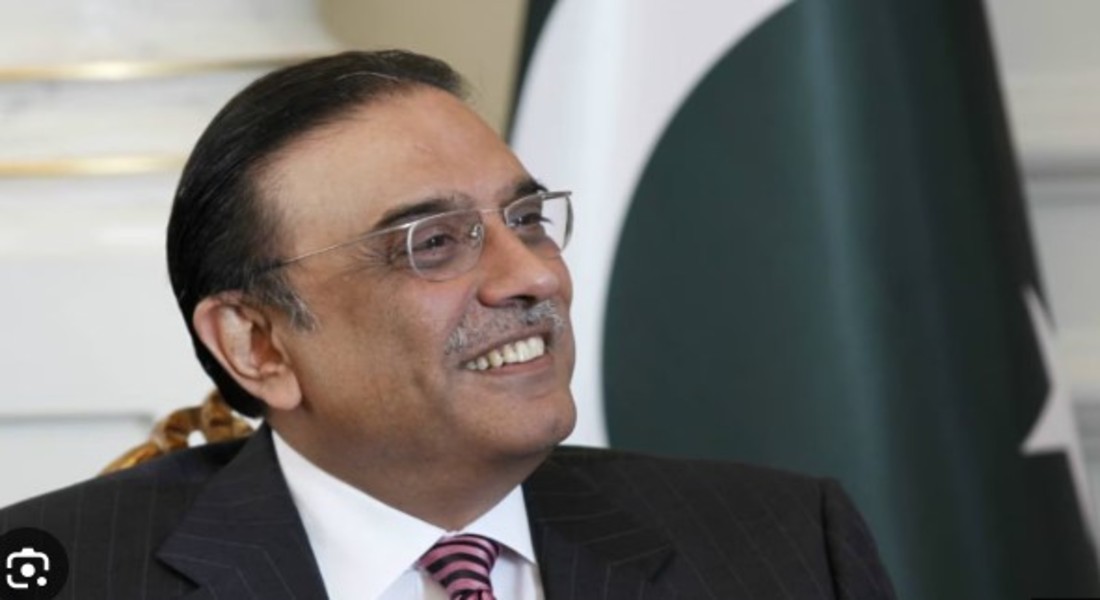
ISLAMABAD: President Asif Ali Zardari on Sunday sent his best wishes to the people of Gilgit-Baltistan and hoped the region would continue to progress, Guider News reported.
In a message for the region’s 79th Independence Day, he said, “Seventy-nine years ago, on this day, the people of Gilgit-Baltistan ended Dogra rule, declared independence and soon after sent a letter to Quaid-e-Azam asking to join Pakistan.
“The people’s desire for freedom has never faded, and their loyalty to Pakistan has never been in doubt.
“On Gilgit-Baltistan’s 79th Independence Day, I offer my heartfelt congratulations to the people and pay tribute to those who took part in the historic struggle against Dogra rule. Their courage, sacrifices and decision to join Pakistan remain an important part of our shared history.”
He recalled that former prime minister Zulfikar Ali Bhutto began major reforms in Gilgit-Baltistan in 1972.
After visiting the region in August that year, the government ended the Frontier Crimes Regulation and the Jagirdari system, closed the old Agency system, and set up a new system of government and courts.
He said the reforms continued in 1974, when the remaining princely states, including Hunza and Nagar, were abolished and the region was brought under a more unified system of administration.
The president said Benazir Bhutto continued the process through the Legal Framework Order of 1994, which set up the Northern Areas Legislative Council. Progress continued in 2009 under the PPP government, which gave the region its present name and set up a Legislative Assembly, an elected chief minister and a governor through the Gilgit-Baltistan Empowerment and Self-Governance Order.
“The people of Gilgit-Baltistan have made valuable contributions to Pakistan’s defence and development. Its location, natural resources and border with China also make the region very important. We must make sure its people benefit through better roads, schools, healthcare, reliable electricity and jobs,” he said.
He added that development for ordinary families means access to good schools and hospitals, more opportunities for young people, and easier access to markets for farmers and small businesses. These needs, including those in remote areas, should remain a priority.
“Gilgit-Baltistan’s mountains, glaciers, rivers and cultural heritage are among Pakistan’s greatest assets. Tourism can create jobs and support local businesses, while the natural environment must be protected for future generations,” he concluded.
Reported By: Our Correspondent Reporter I Islamabad