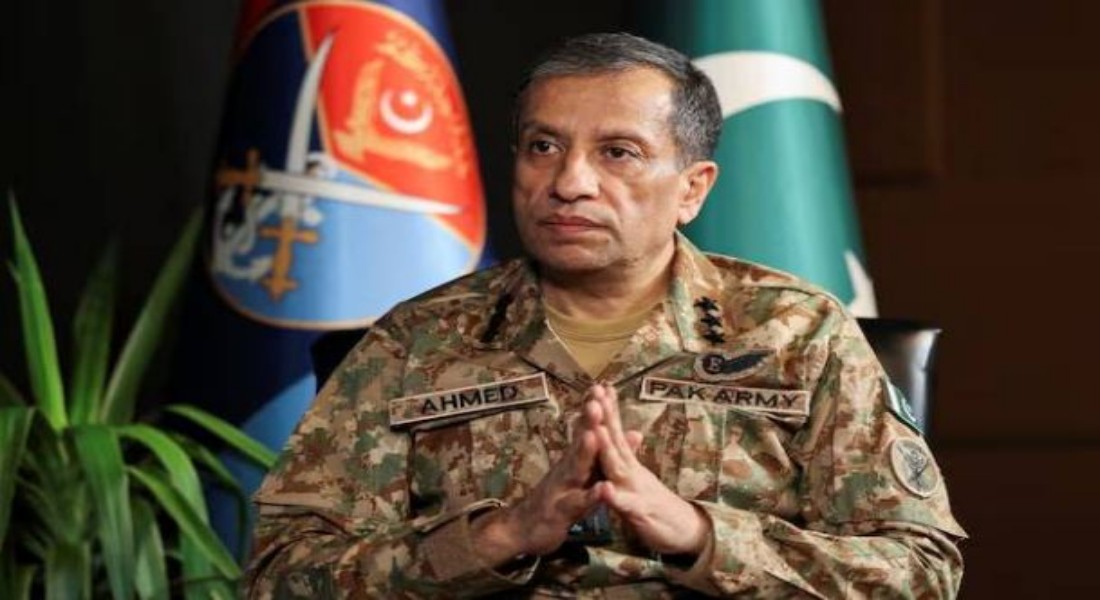
ISLAMABAD: Pakistan’s military is “hopeful but cautious” about its efforts to help ease tensions between Iran and the United States, its spokesman said Friday. It was his first interview since a senior delegation visited Tehran this week.
Army chief Field Marshal Asim Munir, Pakistan’s main mediator, has visited Tehran twice this month to help reduce tensions in the eight-month-old Iran war. His latest visit was on Monday, with officials from Saudi Arabia and Türkiye.
“Why would the Field Marshal go twice if there were no positive signs?” military spokesman Lieutenant General Ahmed Sharif Chaudhry told Reuters. “So yes, of course.”
“We would describe our view as hopeful but cautious,” said Chaudhry, head of the military’s media office.
He said some powerful groups still opposed peace because they believed conflict benefited them, but he did not name them.
Speaking in Rawalpindi, where Pakistan’s armed forces are based, Chaudhry did not say what was discussed in Tehran or whether the United States supported the visit.
Saudi Defence Minister Prince Khalid bin Salman and Türkiye’s intelligence chief Ibrahim Kalin joined Munir in Tehran on Monday.
On August 7, Saudi Arabia, Türkiye and Pakistan signed a defence agreement. It says an attack on any one of them will be treated as an attack on all.
The Makkah Joint Defence Agreement has become more important as the Iran war changes alliances in the region and raises fears of a wider Middle East conflict.
The three countries say the pact is meant to help them protect one another and keep the region safe. Analysts say it is also linked to efforts to manage the effects of the Iran-US conflict.
After Monday’s talks, Mohsen Rezaei, a senior Iranian security official, said regional countries should manage their own security without outside involvement.
The pact does not rule out new members, Chaudhry said when asked whether Iran could join.
“Anyone who shares the goal of protecting one another and keeping peace in the region is welcome,” he said. He added that the three countries’ political leaders would make the decision.
Asked whether Pakistan would send more troops to Saudi Arabia under the agreement, Chaudhry said this would depend on the situation and on decisions by both countries’ leaders.
He said Pakistan was committed to protecting Saudi Arabia and the holy cities of Makkah and Madinah. “We are not part of the conflict within Yemen,” he added.
Fighting between Saudi Arabia and Yemen’s Iran-backed Houthi group has started again during the Iran conflict, raising fears that the war could spread.
In Pakistan, the federal government suspended the provincial government in Khyber Pakhtunkhwa on October 11 and detained Chief Minister Sohail Afridi. The province was run by the Pakistan Tehreek-e-Insaf (PTI), whose jailed former leader Imran Khan is a former prime minister.
The federal government accused the provincial administration of failing to tackle militant violence. PTI rejected the claim, saying its government took part in efforts to fight terrorism. PTI leaders said the move was an excuse to stop protests.
Asked whether the army would now launch larger operations in the province, Chaudhry said that was not how it fought terrorism.
“Our operations are based on information gathered by intelligence teams,” he said. “These operations will increase.”
Reported By: Our Correspondent I Lahore