Bhagwant Rasulpuri, editor of the quarterly Punjabi magazine “Kahani Dhara” based in Chardhdha (East) Punjab, has published a special “Punjabi Short Story Issue” for October–December 2026. This issue features an engaging discussion among intellectuals under the heading “The Fifth Generation of Punjabi Short Story,” initiated by Bhagwant Rasulpuri with contributions from H.S. Dimple, Jasbir Kalsi, Alfaaz, and Sarbaz.
The issue includes a total of 13 Punjabi short stories (in Gurmukhi script), with West Punjab represented by only one fiction writer Lahore-based, renowned Punjabi short story writer Shahzad Framosh. The other authors featured in Kahani Dhara include Jinder, Sukirat, Surinder Geet, Charanjit Singh Pannu, Vipin Gul, Devinder Mand, Harmesh Malri, H.S. Dimple, Joga Bhangal, Surinder Singh Rai, Artinder Sandhu, and Rajinder Singh Dhadda.
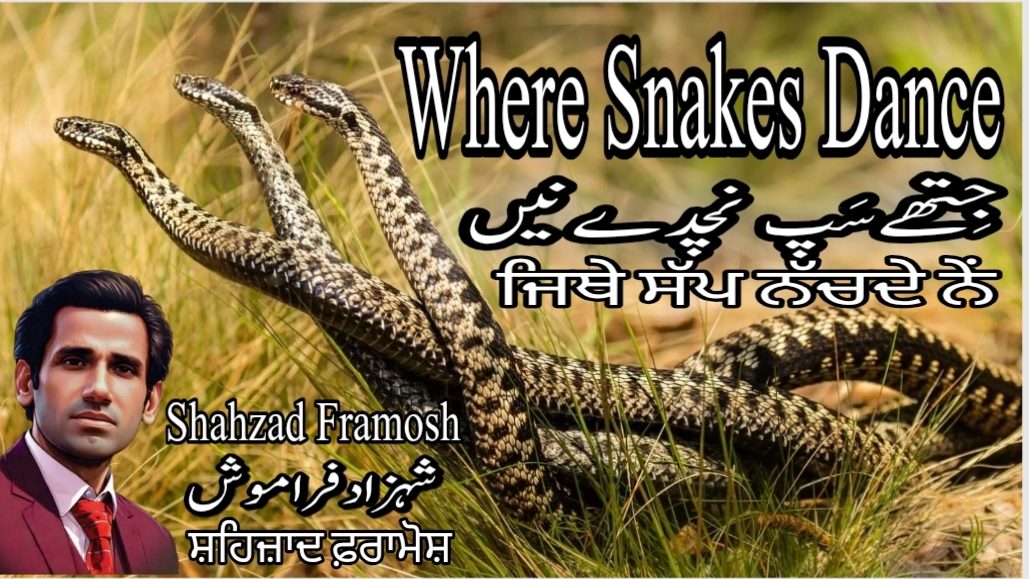
Shahzad Framosh’s story selected for Kahani Dhara is titled “Jithay Sap Nachday Ne” (Where Snakes Dance). It was beautifully transliterated from Shahmukhi into Gurmukhi script by the talented writer and translator Ejaz.
In the review and critique section of the magazine, prominent literary critics including Dr. Sandeep Rana, Narjan Bohas, Dr. Jaswant Kaur Bindra, and Dr. Bhupinder Kaur—shared their thoughts on Jinder’s Zindagi, Prem Mann’s Chubare Di Itt, Bandar Basra’s Man Kathiyan, Balbir Parwana’s Sab Ton Udas Ibarat, and Lal Singh’s Yudh Veer.
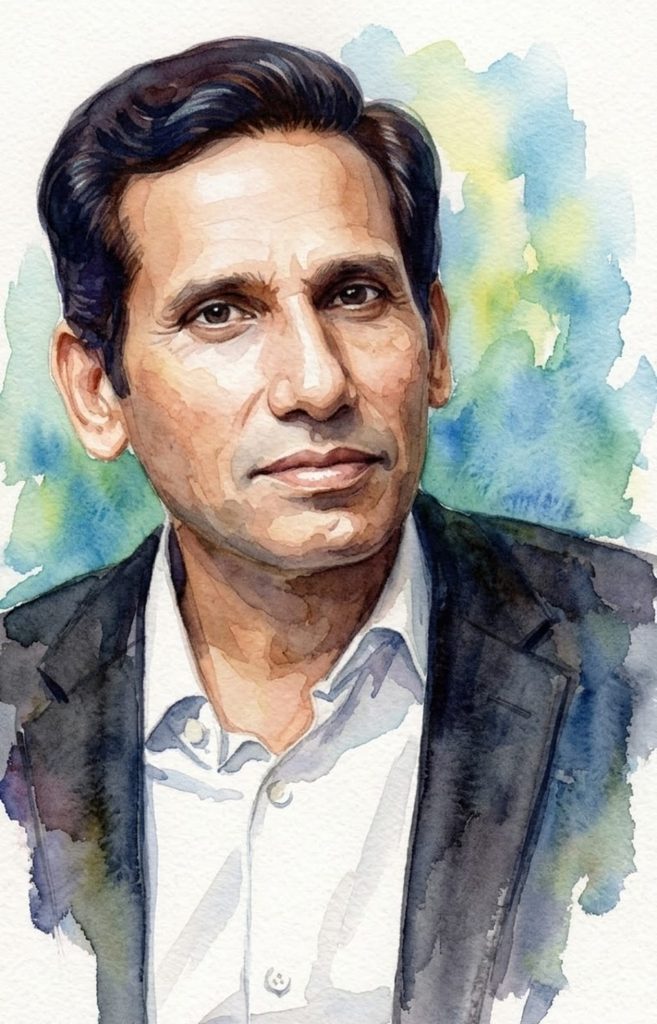
Shahzad Framosh turned to Punjabi short story writing after starting with poetry, and has been writing fiction for two decades. His stories were published back in the day in Jamil Ahmad Paul’s magazine Saver International and Iqbal Zakhmi’s monthly Likhari. Last year, his collection of short stories titled Chup, Sah Te Sufne چپ، ساہ تے سُفنے (Silence, Breath, and Dreams) was published and received widespread acclaim.
Shahzad Framosh has also been involved in journalism for decades. He published the Punjabi language magazine Jannat for several years and served as editor of Suneha, the magazine of Punjabi Adabi Sangat. For 38 years, he has worked tirelessly for the promotion of the Punjabi language, running numerous literary organizations and advocating for Punjabi on every platform.
He is a lifetime member of the Lahore Press Club, where he spent 12 years organizing numerous Punjabi gatherings under the platform of the “Halqa Adab-o-Sahafat” and hosting Punjabi festivals. He remains active at the Lahore Press Club to this day.
Currently, he serves as the Joint Secretary of Lahore’s historic, 87-year-old literary institution Halqa Arbab-e-Zauq at the historic Pak Tea House, where he hosts weekly literary gatherings and has organized multiple evenings dedicated to Punjabi short stories.
The story by Shahzad Framosh which has earned acclaim across West, East, and the global Punjabi diaspora is presented here by “The Guider” for its readers.
جتھے سپ نچدے نیں
Where Snakes Dance
They say every era is imbued with its own melody; only the one who understands poison as a tune and silence as a secret can hear it. In the wilderness of sand, there was a place where there were neither colors, nor shadows, neither songs nor signs—only a breath of wind that had not spoken a language for centuries, carrying only the weight of history.
In the village of snake charmers, a top the “Snake Dunes,” there were no grand houses. They lived upon those sand ridges where every evening the sun itself seemed forced to bow in prostration. In those small dwellings lived the snake people. In some corner lay a jogi’s mat, elsewhere a charmer’s abode, a ascetic’s hut in another direction, or a healer who cured snakebites with mantras; sleep itself wandered restlessly through these homes.
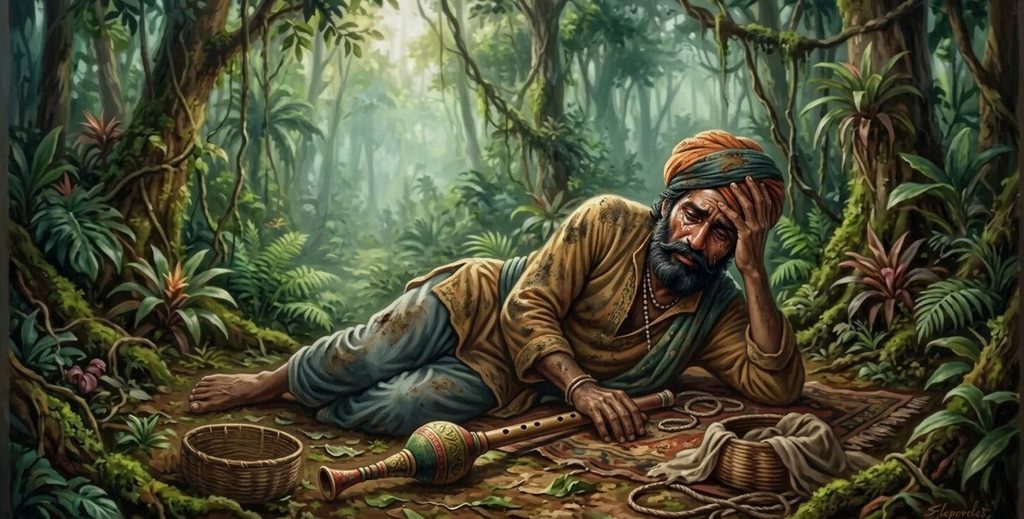
These were the people who could turn pain into sustenance those who fashioned the agony of poverty into a flute (been) and made their destiny dance to its tune. Some of their mud homes were simple, yet filled with love. Their roofs were vaster than our skies, made great by thought, not arrogance.
Every snake charmer carried a flute and a basket. Even if the basket held no snake, the tune hovered in every flute. Every snake concealed a secret, and every secret hid a wounded tale, a shadow, a poison.
Their culture was distinct from the world’s, and their lips uttered enigmatic yet wise words. They were not like us; they belonged to an older wilderness, dwellers from a time before our thoughts. Those snake charmers bore the weight of a blazing sun on their shoulders and the chill of silence on their lips a silence that could stop time itself in its tracks.
The snake was not their life; it was their shadow. Poison was not their livelihood; it was their lesson. They bore every bite as destiny and concealed every wound as a mystery. The snakes dwelling in the dunes came to awaken the inner snake within us. When the sun caught the crimson hem of the mountains and slipped behind them, the flute would begin to wail in their courtyards.
In those courtyards, snakes did not merely dance; they came to dance upon our vanity, our ignorance, and our inner wilderness.
On nights of the full moon (Puranmashi), the mud roofs of the charmers danced with the shadows of cobras and their mates. This was a shade that was not cool, but venomous.
To those snake-folk, life was like the wind unseen, yet felt in every breath. It was their tradition that every year when the scorching sun of Visaakh turned the sand into an oven, they celebrated ‘Sap Visaakhi’. On that day, the flute became not just music, but breath itself, and poison danced as a divine mystery.
It was not a custom; it was spiritual discipline. It was not mere worship, but an intimacy with fire. It was a day to make oneself dance barefoot, not to make the snake dance. Their children were not given rattles to play with in infancy; they were initiated with poison.
A bitter draught, an occasional sting, smiling faces amidst venomous serpents—through this, their wives and children learned that poison does not merely kill; sometimes it shakes a sleeping soul awake.
The jogi stood poised like a bow, making the snakes dance on the sand at his feet every syllable he uttered turned into a prayer to remember God. In every village, the charmers wore gleaming clothes and danced snakes to the music, blending fear and beauty through the notes of the flute.
The onlookers, terrified of snakes, watched with wonder in their eyes as the serpents danced. Their paths were unlike ordinary roads they were paths of the interior, guiding the soul, paths where every moment one had to entwine God within oneself like a snake.
In the midst of spectacle, they gathered the stings of life. Where the snake was filled with venom, it was also a doorway to secrets, and the flute’s melody transformed breath into tune a melody that was both comfort and punishment.
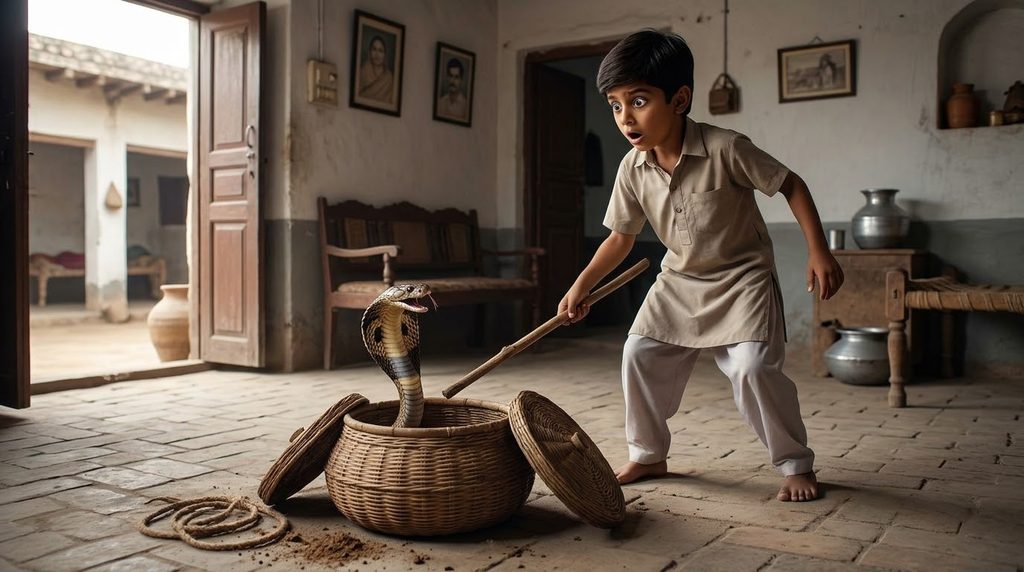
The hiss of snakes and the tune of the flute echoed in their breaths. Their communion was a raga that could make even sorrow dance and compel poison to listen. If ever the shadow of malice crept into a charmer’s heart, he would play his flute and expel it. These people did not merely imprison snakes; they understood them.
Every breath carried the shadow of a sting, and every flute note a cry. Their life was a thirst to understand the flute and a quest to honor truth while enduring poison.
That day was different, too, when the sun hid its face in the sand like a weary laborer. At that hour, the flute of Jamo, the snake charmer, fell silent. He was no ordinary charmer; he was considered the crown prince of snakes in the dunes, for he understood the difference between breath and poison. That day, Jamo found a venomous snake beyond measure black, cold as ice, and with the fire of hell in its eyes.
It radiated an earthy aura, two cubits long and glowing. Behind its hood was a crest; he thought, this must be a snake living for centuries. The legendary wish-granting gem (nag mani) resides in its head, yet no snake could be more lethal. He captured this treasure, sealed it in a basket, and returned home.
Now that basket was a doorway to power. Jamo felt something strange stirring within himself; as he handled the snake, his hands trembled. For the first time, he felt fear not of the snake, but of himself. He felt as though he were imprisoning not a treasure, but a question.
“What if this poison changes me too?” He buried the thought deep within his heart.
He placed the basket of treasure on the upper wall shelf (parchhati) and told his son: “This is the king of poisons. Do not treat it as a game; if you play with it, it will lay bare your ignorance.”
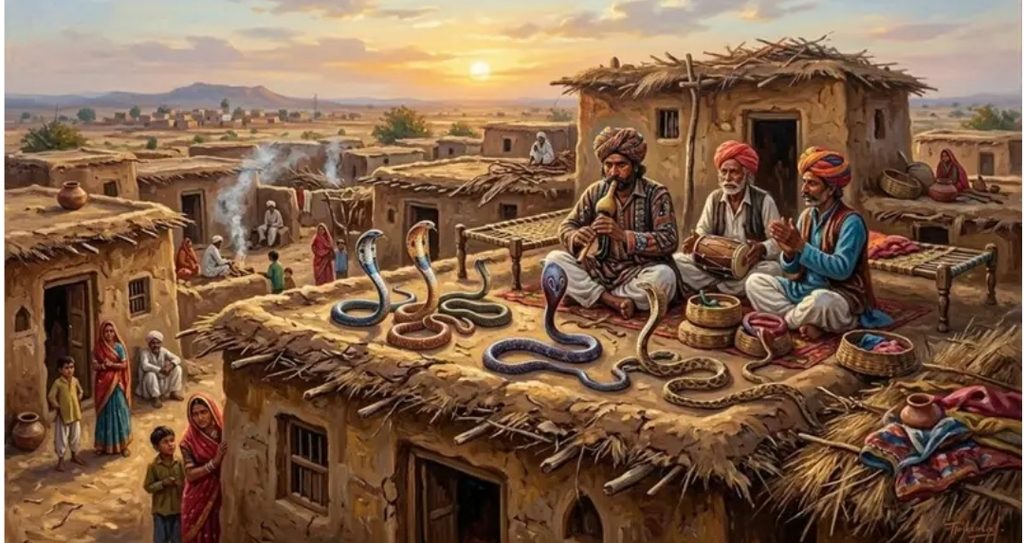
The boy’s eyes widened with astonishment, his lips dry. He had never seen such a snake by his father’s hands, one whose breath seemed fierce and wounded. He listened to his father’s words, and his inner self trembled. He thought: “What if it bites?” Yet he asked his father not a single question. He simply rubbed his fingers together nervously, as if gripped by inner fear.
He also wondered: “Will I ever be able to play the flute like my father? I have only looked at the snake; I have never felt its venom.” He was not afraid of the snake or the sting, but of his father’s wrath.
That night, shadows began to stir on the roof. The charmer felt as though one of those shadows belonged to that snake, which now resided not just in the basket, but within his own soul.
A few days later, Jamo’s son being just a child forgot everything. To him, the colors of poison seemed like mere spectacle. He believed the snake only danced, never bit. One day, the father went far away in pursuit of another snake perhaps to some village, some forest, or perhaps to search for a forgotten note of the flute. At that moment, the boy was alone in the house; his mother was busy at the hearth, teaching her hands the language of patting dough.
Meanwhile, the boy tried to lock gazes with the snake’s eyes. Inside the basket, the snake was silent, yet awake like venom. The boy’s mind began to treat it as a game. He picked up a stick and poked the basket on the shelf, trying to uncover the secret his father had spoken of.
Then, he struck the basket harder a second time, and it collapsed and scattered like sand. A cry, a fracture, a moment that emptied the veins of time of their pulse. From the prison of the basket, the venom broke free silent as lips, yet burning from within. It needed neither flute nor fear… it cast a single glance and struck the boy.
That evening was neither dusk nor night; the sun vanished, and the stars failed to gleam. In the courtyard, there were only the mother’s lamentations (wain) and a life hanging limp like a snapped kite. The boy, who had thought the basket a plaything, lay on the ground. Foam bubbled at his lips, wonder frozen in his eyes no shriek of pain, no prayer. Just a body where understanding had instantly turned into punishment. A healer was summoned, but the child had already journeyed to another world.
The mother wailed, clutching a stick and searching, but the snake had vanished; behind her remained only wails, dirges, and the snake folk.
The father returned at night, flute in hand, sleep in his soul, exhaustion in his bones, and the hope of a preserved melody upon his lips. He thought: I will teach my son the craft; I will make the snake a mystery, and the notes of the flute will reflect the hues of God.
When he entered the courtyard, the place where his son used to play was now silent as a grave. The basket lay open in the sand, beside the corpse of the bitten boy—who was no longer a child, nor a regret, but a silent question. For a moment, the charmer could neither breathe nor speak; he stared at the basket, his world utterly ruined.
He tried to shake the head of the boy resting in the lap of the wailing mother, but it was merely a desolate puppet in his hands—no heartbeat, no voice, no struggle, no fatigue. The courtyard where the flute once wove melodies now echoed only with the sting. He sat at his son’s head and played the flute softly, but where music once dwelt, there were now broken breaths, sighs, and deep sobs. The flute played, but the snake neither danced nor could be found.
At that moment, a venom seeped into the charmer’s heart a poison delivered not by a snake, but by time, broken trust, and human ignorance. To imprison a snake was to lock away knowledge. And if knowledge falls into the hands of the foolish, it burns down courtyards, and the flute no longer plays it weeps.
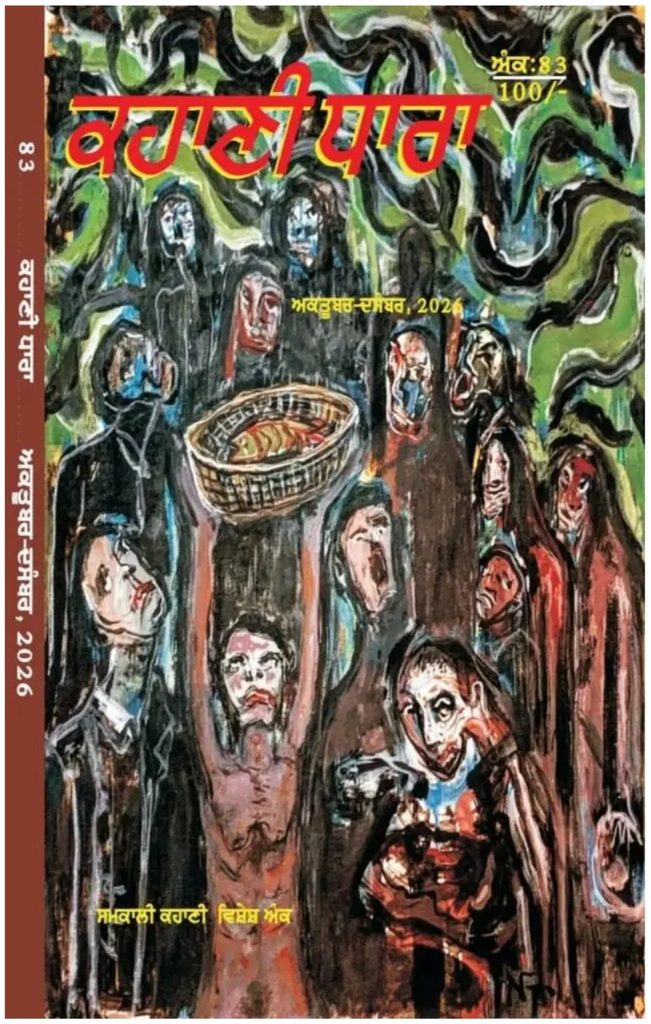
It was a night where even the moon wrapped itself in its weariness and turned away from that shelf. The stars, which for centuries had watched over the world’s sorrows and paths, held darkness in their eyes. He took the flute in hand and sat where he had once imprisoned the snake, believing it a treasure.
The soft notes of his flute no longer carried the fragrance of spectacle; the sound was no longer meant for dancing, but had become the echo of a father’s silence. The flute that once made snakes dance felt cold in his hands, as if his own breath had slipped away with the snake’s bite. Jamo played the flute again, but its voice became neither raga nor song; it turned into a plea. A sharp wind blew through it, like the hiss of a snake, the final gasp of a son, the helpless cry of a father.
Struggling with grief, he began to feel himself lost in a vast emptiness. At that moment, an old faqir appeared before him the same one who had often met him on paths, speaking words of wisdom. The faqir delved deeply into his grief and sorrows. It seemed to him as if the faqir’s voice was echoing through the shadows of the wall.
He was saying: “By imprisoning the snake, did you conquer knowledge, or did you lose to time?”
He spoke again: “Poison does not come solely from a sting; if a man conceals knowledge instead of understanding it, it becomes a fire within the heart.”
The charmer’s flute now seemed to play even within silence, as if a raga were embedded within a wound. The sighs in its holes were a testimony. That son was now no longer just a corpse, but a truth—a truth that died before its time, that perished in the light, unable to transform into a mystery.
Before him in the sand lay neither snake nor basket, only a line… the line separating treasure from skill. He placed the flute where the basket had shattered. The flute was silent now, but even its silence had turned into a melody.
From the shadows, the faqir spoke again: “Did you only learn to catch the snake with the flute’s tune, or did you also learn to recognize poison within the flute’s silence?”
Drowning in an ocean of grief, he shrank into himself. The faqir’s words echoed once more: “There is venom in the snake, fire in time, and vanity in man. If these three are not understood, only ashes remain in the days to come.”
He was now trying to play the flute not with notes, but with breath. In every note, he played a regret, a prayer, a question.
The storms of grief raged on, and from them came the faqir’s voice again: “You imprisoned a note, you found a treasure, but you did not weigh its price. You united melody and raga, but you gave no words to pain.”
He moved toward the shadow to speak with the faqir, but there was only darkness. His chest felt ready to burst with the sorrow of his son. The final note of his flute stretched long—a note that tore through the silence. In that note, only a shadow stirred… perhaps a snake, perhaps a son, perhaps that truth that always comes to teach time a lesson: if time is treated as a mere game, only poison remains.
The flute held no music now, only a cry. Jamo felt as though the snakes in the sand were no longer dancing, but merely watching. As if he too were learning what time teaches and what man forgets.
He looked up at the sky, where even the light was silent, and sorrow was enfolded in that silence. He took a deep breath, placed his hand upon the flute; that closed room, that basket, that snake, that son, and he himself had now all become confined within a single flute.
A shadow lay down beside him on the earth… neither snake, nor son, nor any physical body. Only a breath that still played within the flute, and it too now seemed asleep. Perhaps it was weary, perhaps it had ended, or perhaps it had found salvation.
Reported By: Editorial Editor