
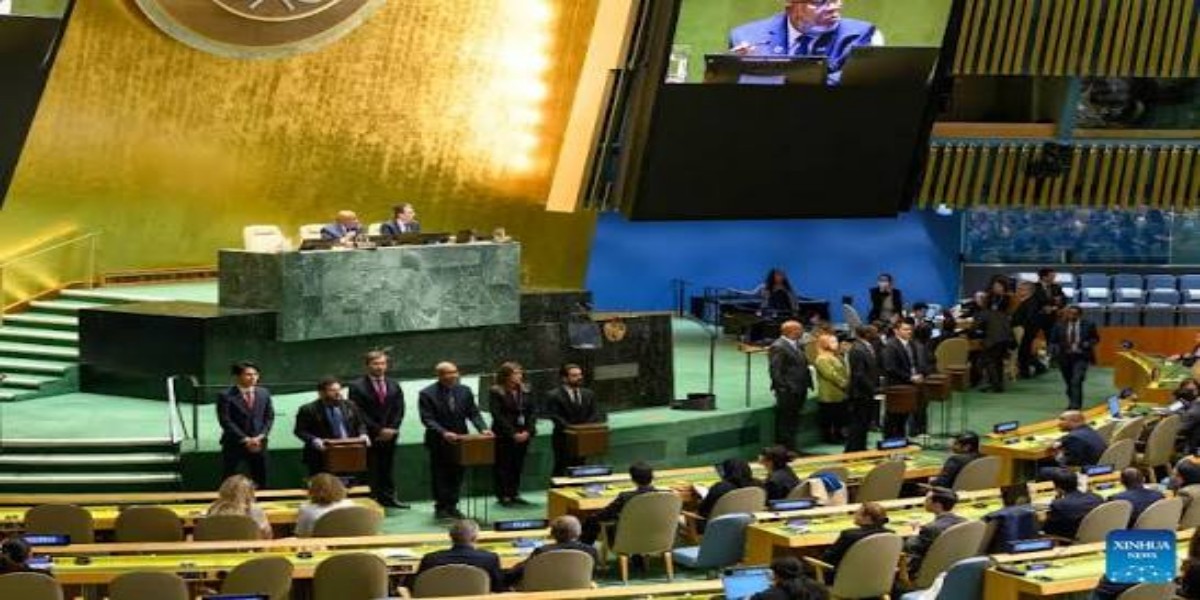
NEW YORK: Fifteen countries have been elected to the United Nations Human Rights Council for the 2027–2029 term in a vote that has drawn criticism from human rights organisations over the lack of competition among candidates.
According to reporting by The Associated Press, all regional groups nominated exactly as many candidates as there were available seats for the three-year term, leaving the 193-member UN General Assembly without competitive races in Tuesday’s election.
The newly elected members are Zambia, Ghana, Nigeria and Burundi from Africa; Kuwait, Nepal, Jordan and Japan from the Asia-Pacific region; Brazil, the Dominican Republic and Uruguay from Latin America and the Caribbean; Ireland and Germany from Western Europe and other states; and Moldova and Ukraine from Eastern Europe.
The Human Rights Council, based in Geneva, consists of 47 member states elected by the General Assembly through a secret ballot. Its responsibilities include reviewing human rights situations worldwide, appointing independent experts and investigating alleged violations.
Human Rights Watch criticised the uncontested election, arguing that competitive nominations would give UN member states a meaningful opportunity to reject candidates over concerns about their human rights records.
The organisation raised concerns about Burundi’s governance, justice and accountability record. It also called for accountability for serious crimes committed by all parties in Nigeria’s conflict involving Boko Haram, and urged Brazil to address police abuses.
The criticism highlights a continuing debate over how countries selected for the UN’s principal intergovernmental human rights body should demonstrate their commitment to protecting fundamental freedoms.Responsibility of Newly Elected MembersUN spokesperson Stéphane Dujarric said member states elected to the council carry an added responsibility to protect human rights at home and advocate for them internationally.
The council examines allegations of violations, considers country-specific situations and provides a platform for governments, independent experts and civil society representatives to discuss human rights concerns.
Although its membership is designed to reflect equitable geographical representation, the latest election has renewed questions about whether the selection process provides sufficient competition and accountability.The newly elected countries will begin their three-year terms on January 1, 2027.
Their participation will be closely watched as the council continues to address human rights concerns in regions affected by conflict, political instability and allegations of abuses.
Reported By: Mirza Maqbool Baig I Guider News