“O soil of Karbala! Never forget this honor bestowed upon you,Upon your earth rested the body of the beloved grandson of Lady Fatimah (RA).”
The Islamic year begins with Muharram al-Haram, a month of sanctity, dignity, and sacrifice. It reminds the believers that the course of history is not always changed through force and power, but through character, principles, and selfless sacrifice. The tenth of Muharram, Ashura, is not merely a date in history; it is a defining moment that shook the conscience of humanity and established a permanent distinction between truth and falsehood that will endure until the Day of Judgment.
The event of Karbala was not a struggle for a throne or a crown, nor was it a political contest for power. Rather, it was a confrontation between two ideologies, two ways of thinking, and two systems of values. On one side stood principles, justice, honesty, adherence to the Shariah, and human dignity; on the other stood oppression, hereditary rule, personal dictatorship, and the arrogance of power. At one of the most critical turning points in history, Imam Husayn (RA) decided that when silence strengthens falsehood, remaining silent itself becomes a crime.
Before departing from Madinah, the noble Imam clearly declared that his objective was not to attain political authority, but to reform the Muslim community, promote righteousness, and prevent wrongdoing. Through his actions, he demonstrated that for a true believer, principles are more precious than life, wealth, or power. For this reason, he chose martyrdom over pledging allegiance to injustice, refusing to compromise the truth.
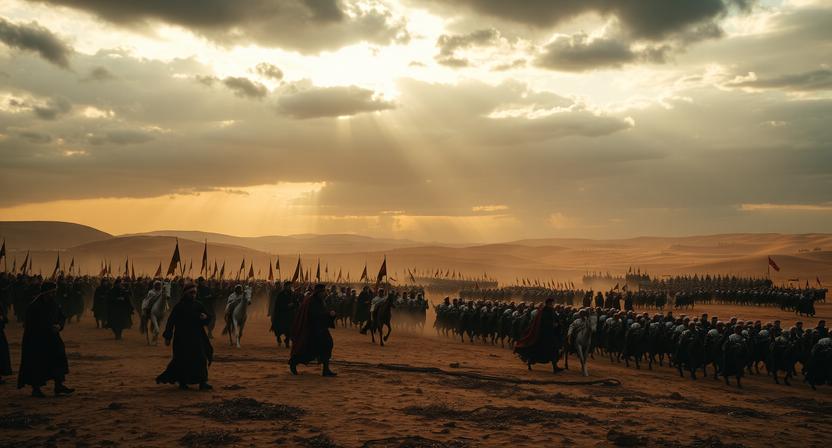
On the plains of Karbala, it was not merely seventy-two devoted souls standing against a vast army. It was faith confronting brute force, character challenging tyranny, and truth defying falsehood. The thirsty children weakened by suffering, the women who embodied patience and steadfastness, the loyal companions who sacrificed their lives with unwavering devotion, and Imam Husayn’s unshakable determination together created a story of humanity that remains unparalleled in history. This is why Karbala is not merely an event—it is a living consciousness and an eternal movement.
Had Imam Husayn (RA) accepted temporary expediency, perhaps one life might have been spared, but the spirit of truth would have been wounded. By sacrificing himself and the members of his blessed household, he proved that bowing before oppression is not true life, while standing firmly for justice—even at the cost of one’s life—is genuine success. History itself has affirmed this verdict: the sword may achieve temporary victory, but noble character reigns over hearts forever.
The tragedy of Karbala also reminds us of the foundational principles of the Islamic way of life. Justice, trustworthiness, consultation, the rule of law, the protection of public rights, and accountability before Allah are values without which no society can achieve lasting stability. When power itself becomes the ultimate objective and morality is separated from politics, oppression, injustice, and social imbalance inevitably emerge. Imam Husayn’s struggle was, in essence, a struggle to revive these very principles.
Muharram is not merely a month of grief; it is a call to self-accountability. Ashura reminds us that standing for truth is not confined to the battlefield but is a responsibility in every sphere of life. Whether in our homes, workplaces, marketplaces, courts, educational institutions, or corridors of power, choosing justice, honesty, and truthfulness is the practical embodiment of the character exemplified by Imam Husayn (RA).
Today, the Muslim Ummah faces intellectual, moral, and social challenges, and the message of Karbala continues to offer guidance. Remaining silent in the face of oppression, accepting injustice as normal, abandoning principles for personal gain, or refusing to support the truth despite recognizing it—these are precisely the attitudes against which Imam Husayn (RA) warned the Ummah through his supreme sacrifice.
Karbala also teaches us that numbers are never the measure of truth. Sometimes a single caravan changes the course of history when it is guided by faith, sincerity, and the righteousness of its purpose. That is why, despite the passage of centuries, the message of Karbala remains ever fresh, and the name of Imam Husayn (RA) continues to symbolize resistance against tyranny, freedom of conscience, and steadfast perseverance.
What is needed today is that we do not reduce Muharram to an occasion of emotional remembrance alone, but also understand its intellectual and practical demands. If honesty becomes the hallmark of our character, justice the basis of our decisions, integrity the foundation of our politics, transparency the principle of our economy, and human dignity the central value of our society, then we will truly honor the sacrifice of Imam Husayn (RA). This is the enduring message that Karbala offers to every generation: truth can never be defeated so long as those who uphold it remain steadfast.
May Allah Almighty grant us the ability to draw genuine guidance from the lives of Imam Husayn (RA), the noble Ahl al-Bayt (RA), and the martyrs of Karbala; to recognize the truth, remain steadfast upon it, and fulfill our responsibilities in establishing justice and righteousness. Ameen.
 Written By: Samina Saeed