By Mateen Saeed
Pakistan is the 4th largest milk producer but still relies heavily on imports — modernizing dairy practices could unlock its export potential!
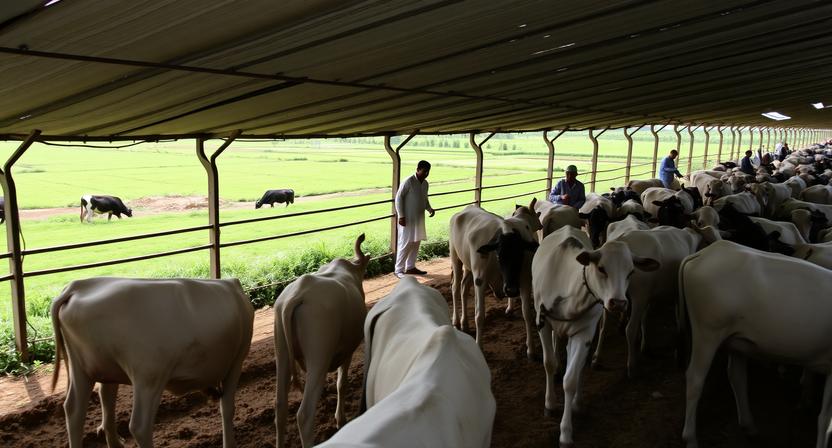
Despite being 4th top milk producer in world with massive livestock population, Pakistan imports around 50,000 tons of dairy products annually, which includes cheese, whey, and milk powder. Imports meet about 3% local demand, 97% met by local raw milk. According to 2024-25 data, Pakistan holds approximately over 59 million cows and 47 million buffaloes; Punjab leads with largest share, followed by Sindh.
Despite being 4th largest milk producer in world, Pakistan is not ranked among exporters of Dairy products like New Zealand, Germany, America, Netherlands, Belgium, France and Australia. New Zealand with about 8 billion dollars exports leads in this sector. Low milk yield of dairy animals compared to international standards is main factor which has kept Pakistan far away from global dairy market; other factors are poor quality of fodder, informal supply chain, lack of value addition, least use of modern practices etc.
As far daily yield per animal is concerned, milk production of 8 Pakistani milking animals is equal to one milking animal of the developed world. In Netherlands, average daily milk yield per cow is approximately 40 litre, in America about 25 litre, New Zealand 25 litre, France 22 litre; and in Pakistan daily milk yield of cows is approximately 10 litre; Buffaloes 7 litre.
Lack of modern farming practices, cold supply chains, and value are likely to remain major hindrance in our efforts to become competitors in Global dairy market.
Pakistan can be ranked among lucky countries which can find markets with ease to absorb surplus dairy production, even agricultural production in neighbourhood with least effort. Apart from China, Central Asian countries can also become potential markets for Pakistan, provided we manage to double daily milk yield and this goal can be achieved if livestock departments of Punjab and Sindh are mobilized with focus on extension.
Punjab Government under dynamic leadership of Chief Minister Maryium Nawaz has taken various steps to boast economy of province. Chief Minister Sindh Murad Shah is also a proactive and visionary. It seems both honorable Chief Minsters has so far not paid enough attention to the fact that the livestock sector deserves. They are supposed to set a timeline for targeted improvement in daily Milk yield, starting from 50% improvement in 3 years, doubling within five years. If required and targeted resources are made available, our veterinarians do have the expertise, competence and passion required to realize the desired results.
The dairy sector can also contribute to the national economy as a reliable energy source with biogas, methane-rich fuel for cooking, heating, and electricity generation, as well as nutrient-rich bio-fertilizer, plus bio-CNG, a high-efficiency fuel that reduces greenhouse gas emissions too.