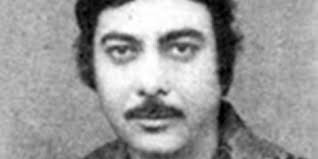
Riaz Batalvi was born on Feb5,1937 in Gurdaspur,His family migrated to Gujrat.He joined the famous newspaper “Roznama Kohistan.” In 1963, he moved to Lahore.
Renowned journalist and writer Riaz Batalvi was one of the most distinguished feature writers, fiction writers, and dramatists of Pakistan. He became immensely popular among readers because of his unique writing style and realistic storytelling. His features were sensational yet deeply rooted in social awareness.
He introduced new dimensions to Urdu journalism and Pakistan Television. Although Riaz Batalvi earned his greatest fame as a feature writer through newspapers and serialized writings, his contributions as an author extended to television dramas and cinema as well. He rendered remarkable services not only to Urdu journalism but also to the fields of television drama and film.
The real name of the legendary writer known as Riaz Batalvi was Riaz-ul-Hassan. He was born on February 5, 1937 in Batala, District Gurdaspur, in united Punjab during British India. It was a period when journalism and literature in the subcontinent were becoming important sources of social awareness.
After the creation of Pakistan, his family migrated and settled in Gujrat, Pakistan. He received his early education there. Due to difficult circumstances, he could not pursue higher formal education, yet his passion for reading and writing led him toward journalism. As a writer and journalist, he achieved extraordinary fame and international recognition. During his era, Riaz Batalvi was considered a hero among newspaper readers.
When he adopted journalism as a profession, Gujrat soon appeared too limited for his ambitions. In search of broader opportunities, he moved to Rawalpindi, where he joined the famous newspaper “Roznama Kohistan” under the renowned novelist and journalist Naseem Hijazi. There he proved his remarkable talent.
Later, in 1963, when “Roznama Mashriq” was launched from Lahore, he shifted to Lahore and remained associated with the newspaper for thirty-two years. He also served as an editor and contributed writings to other newspapers, including “Roznama Jang.”
Riaz Batalvi is regarded as one of Pakistan’s greatest feature writers and among the pioneers of feature journalism in Urdu. Through relentless hard work, dedication, and research, he dominated the field of feature writing for more than forty-one years.
His writings beautifully blended reality with fiction. His features possessed strong storytelling, vivid imagery, and memorable characterization. He presented ordinary incidents in such a compelling manner that readers remained captivated until the very end.
He was a master storyteller. It was often said that stories themselves searched for him. To gather material for his features, he would disguise himself in different forms. Sometimes he mingled with groups of beggars, sometimes he worked as a porter, and at other times he wandered through streets as an ordinary traveler or visited government offices pretending to be a poor petitioner.
Whatever he experienced during these adventures was later transformed into powerful feature stories. During these investigative journeys, he was even arrested several times. He also wrote features based on prison life and jail conditions.
Several of Riaz Batalvi’s famous features were adapted into television dramas and films. Pakistan Television transformed many of his writings into the highly popular drama series Aik Haqeeqat Aik Afsana, which achieved extraordinary success and popularity.

The series was based on dramatized real-life incidents and explored social, psychological, family, and criminal themes. Realistic characterization, powerful dialogues, suspense, social criticism, and moral lessons were the defining features of the series.
Many memorable dramas produced under this series during the 1970s and 1980s became immensely popular, including Ruby Kis Ki Beti Hai, Dubai Chalo, Sannata, Wohi Manzilein Wohi Raste, Aks Aur Aaine, Waaris, Talash, and Khalish.
Among these, “Dubai Chalo” became one of his most celebrated works. The story highlighted the dreams of ordinary Pakistanis seeking employment abroad, their desire for wealth, and the darker realities of greed and exploitation. Due to its immense popularity, the story was later adapted into a film in 1979, which also became highly successful.
“Ruby Kis Ki Beti Hai” gained fame for its suspense-filled narrative and social tragedy, while “Sannata” explored psychological and social pressures. “Wohi Manzilein Wohi Raste” addressed themes of human relationships and destiny.
“Aks Aur Aaine” reflected social contradictions and human psychology, whereas “Waaris” focused on family conflicts and inheritance disputes. “Talash” portrayed human struggle and inner conflict, and “Khalish” depicted love, deprivation, and remorse in a deeply emotional manner.
Several books containing Riaz Batalvi’s writings were also published. These include Leedran-e-Karam, Aur Furaat Behta Raha, Ek Paise Mein Do Tank, and Sachi Kahaniyan.
Realism was the dominant characteristic of his writings. He presented real social issues in the form of stories. Suspense was such an essential element of his style that readers remained engrossed until the conclusion. His dialogues were natural and close to everyday language.
His characters possessed psychological depth, and he portrayed their inner emotions with remarkable skill. Beyond entertainment, his writings carried strong messages of social reform and awareness.
Riaz Batalvi left a profound impact on Pakistani journalism and drama writing. He popularized feature journalism, promoted dramatization of real-life events, and gave a new identity to suspense dramas. He strengthened realism in television drama, and many later writers and dramatists were inspired by his style.
Patriotism was one of the most prominent qualities of his personality. During the 1965 Indo-Pak war, he introduced the famous slogan “One Pessa, One Tank” through one of his writings. He suggested that if every citizen saved just one coin daily and contributed it to the national treasury, the nation could purchase a tank every day. The idea became extremely popular and turned into a nationwide movement.
Riaz Batalvi occupies a unique position in Urdu journalism. He did not limit journalism to mere reporting; rather, he connected it with literature, psychology, and social consciousness. Readers eagerly waited for his features, and newspapers witnessed a remarkable increase in circulation whenever his writings were published.In recognition of his outstanding journalistic services, the Government of Pakistan awarded him the Pride of Performance on 14 August 1986.
Known as a people-friendly journalist, Riaz Batalvi was also a dedicated social worker. He considered journalism not merely a profession but a means of public service. Through his powerful writings, he helped solve public problems. In “Roznama Mashriq,” he regularly wrote a column titled “Isey Bhi Parhiye” (“Read This Too”), which highlighted public complaints and social issues.
For helpless and struggling people of that era, the column functioned almost like a free public helpline. His readers greatly appreciated his “Reader Service” and “Sunday Features.”
Riaz Batalvi also remained actively involved with the Patient Society of Sir Ganga Ram Hospital, helping patients and addressing their concerns. Since his residence was located near the hospital, he developed a daily habit of buying flowers every morning and distributing them among patients in different wards.
On one such morning, while carrying flowers for patients, he suddenly fell ill on the road. People nearby immediately shifted him to the hospital, but despite the doctors’ efforts, he could not survive. Thus, the veteran journalist and legendary writer Riaz Batalvi passed away on January 15, 2003 at the age of sixty-five. He was laid to rest in Mominpura Graveyard, Lahore.
Although Riaz Batalvi is no longer among us, his art and legacy continue to live on. Even today, his writings are regarded as an important chapter in the history of Pakistani journalism. His life and work remain a guiding light not only for journalists and writers but also for ordinary people.
 Opinion By: Mr. Shabbir Sadiq