As pilgrims gather in Makkah for Hajj 2026, millions will soon walk between Safa and Marwa, retracing the steps of a woman who ran through a desert with no water and no guarantee.
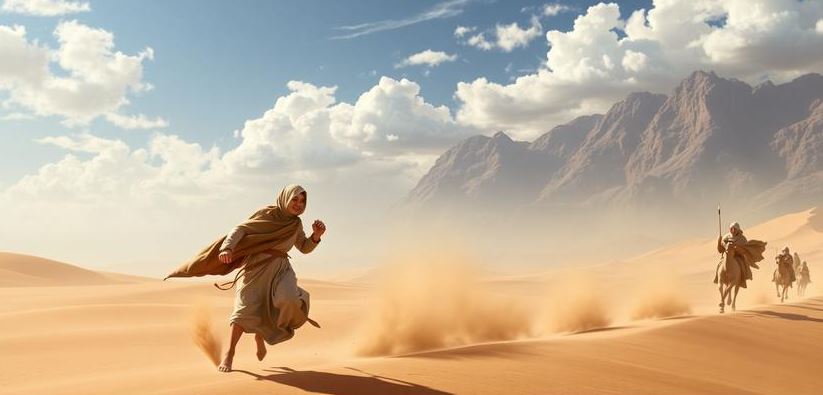
The valley of Makkah was empty when Hazrat Hajra (AS) was left there with her infant son Ismail. No shelter, no people, no visible way forward. Ibrahim (AS) had walked away on Allah’s command, and now she stood alone in a landscape that offered nothing but heat and silence.
Most of us would call that the end of the story. But Hazrat Hajra’s response wasn’t to sit and wait. She began to run.
Between Safa and Marwa, she made seven trips, scanning the horizon for help, checking on her child, climbing the hills again. Her feet tore into the sand, her throat went dry, and still she moved. It wasn’t elegant. It wasn’t strategic. It was desperate, persistent movement in the absence of a clear path.
That’s sabr.
We often think of patience as stillness. As sitting quietly and accepting what’s been given. But the sabr of Hazrat Hajra (AS) shows us something else: patience can look like motion. It can look like refusing to collapse when you don’t know what comes next. It can look like taking the next small step when the bigger picture is blank.
The water of Zamzam didn’t appear because she stopped. It appeared because she kept going until she had exhausted her own effort. In Islamic tradition, action and reliance go together. You tie your camel first, then trust in Allah. Hazrat Hajra (AS) tied her camel by running. She gave everything within her control, and Allah opened what was beyond it.
Why this matters now
Most of us aren’t stranded in a desert. But we know the feeling.
It’s the job application you sent and heard nothing back from. It’s the business that isn’t growing despite your best efforts. It’s the personal loss that leaves you waking up to a life that no longer makes sense. It’s that period where the path you thought you were on just disappears.
In those moments, the advice we get is usually one of two things: “Be patient and wait” or “Hustle harder and fix it.” Both miss the point.
Hazrat Hajra’s story suggests a third option: patient movement. Keep moving within your circle of your control, even if that movement feels small repetitive, and unglamorous. Send one more email. Make one more call. Write one more paragraph. Show up for the task in front of you when the outcome feels distant.
That’s not hustle culture. Hustle says your worth is in the result. Patient movement says your responsibility is in the effort, and the result belongs to Allah.
The lesson in the ritual
We re-enact her run e4very year in Hajj and Umrah. Millions of people walk between Safa and Marwa, retracing the steps of a woman; the ritual survives because the lesson thrives. When life puts you in a valley with no water, you don’t need to have the whole map. You need to take the next step you can see. And then the next; and trust if you keep moving with sincerity, the unseen will open.
Resilience isn’t the absence of fear or exhaustion. Hazrat Hajra (AS) was terrified; she was running for her child’s life. Resilience is choosing to move anyway. So if you’re in that valley right now – relationship strained, career stuck, faith feeling dry – don’t confuse the emptiness for a verdict.
The path might be hidden, but it isn’t gone. Get up. Run between your Safa and Marwa. Do the work in front of you. Leave the outcome to the One who brought water from stone. And remember: sometimes the most profound guidance comes after the moment you decide not to give up.
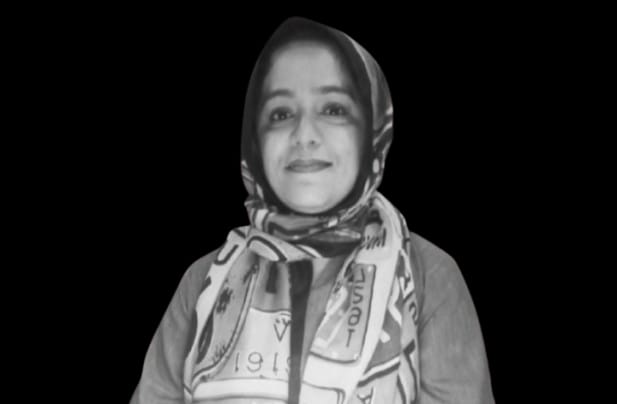 The writer is a published author, former teacher and a freelance contributor. She writes on faith, resilience and finding meaning in everyday struggle. She can be reached at sanamujahid6@gmail.com.