LAHORE: The content of an international regulatory framework on the regulation, monitoring and oversight of the activities of private military and security companies; the Working Group of Experts on People of African Descent; and the Working Group on Enforced or Involuntary Disappearances.
Further resolutions adopted concerned the right to development; the use of mercenaries as a means of violating human rights and impeding the exercise of the right of peoples to self-determination; youth and human rights; countering cyberbullying; promoting accessibility for the full enjoyment of all human rights by all; the role of good governance in the promotion and protection of human rights;
Human rights and Indigenous Peoples; the human rights to safe drinking water and sanitation; the impact of anti-personnel mines on the full enjoyment of all human rights: strengthening victim assistance; the human rights of migrants; national human rights institutions; human rights and transitional justice; and from rhetoric to reality: a global call for concrete action against racism, racial discrimination, xenophobia and related intolerance.
The Council also adopted two decisions: one on the open-ended intergovernmental working group on an optional protocol to the Convention on the Rights of the Child on the rights to early childhood education, free pre-primary education and free secondary education, established by Human Rights Council resolution 56/5; and the other with regards to continued non-cooperation of a State under review with the universal periodic review mechanism.
It also adopted one Presidential Statement on the report of the Advisory Committee.Additionally, during the session, the Council adopted the outcomes of the Universal Periodic Reviews of 14 countries, namely Namibia, Niger, Mozambique, Estonia, Paraguay, Belgium, Denmark, Palau, Somalia, Seychelles, Solomon Islands, Latvia, Sierra Leone and Singapore.
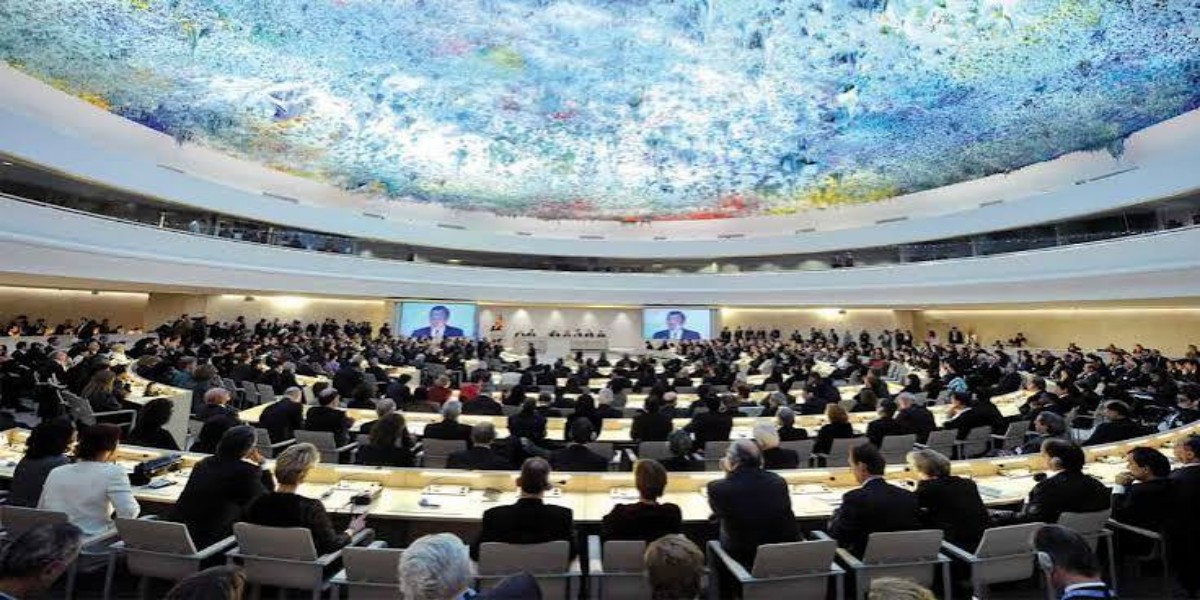
On the final day of its sixty-third session, the Council elected six members of the Advisory Committee§, appointed seven mandate holders and adopted, ad referendum, the draft report of the session.
Marcos Gómez Martínez, Vice-President and Rapporteur of the Human Rights Council, presenting the session report, said in addition to adopting 34 resolutions, two decisions and one president’s statement during the session, the Council had held 39 interactive dialogues, four enhanced interactive dialogues, six panel discussions, one closed meeting under the complaint’s procedure, and adopted the Universal Periodic Review outcomes of 14 countries.
In his concluding remarks, Sidharto Reza Suryodipuro, President of the Human Rights Council expressed profound gratitude to all those who had made the session possible, including the members of the Council’s Bureau and Secretariat, conference services, other United Nations staff, Member States and civil society
Reported By: Mirza Maqbool Baig I Guider News