
Humans often ask themselves, “Who am I?” But perhaps a more significant question is, “What am I becoming today, and what do I aspire to be tomorrow?” Many of us view our identity as a fixed reality, as if it were carved in stone.
In truth, however, a person’s personality, thoughts, character, and identity are constantly being shaped by their decisions, experiences, relationships, successes, and failures. Every decision writes the next chapter of our lives.
The person who once considered themselves weak can become a beacon of hope for others. The student who lagged behind in studies can become a successful entrepreneur. Someone who has suffered through trials can become a guide and a source of inspiration. Your past defines you, but it does not dictate your destiny.
Islam teaches us not despair, but hope, reform, and continuous improvement. The Quran reminds us that a human can change if they truly intend to. In Surah Ar-Ra’d, Allah states: “Indeed, Allah will not change the condition of a people until they change what is in themselves.” This carries the message that change starts not from the outside, but from the heart, intention, and actions.
If a person acknowledges their mistakes and turns toward Allah, a new beginning is always possible. The Quran assures us: “Do not despair of the mercy of Allah. Indeed, Allah forgives all sins.” This is a message of hope for those who deem themselves failures because of their past.
The Prophet Muhammad (PBUH) linked our true identity to our intentions, character, and deeds. He said, “Actions are but by intentions,” and, “The best among you are those who have the best character.”
Furthermore, it is narrated that the Prophet (PBUH) said, “Allah does not look at your appearances or your wealth, but He looks at your hearts and your deeds.” These teachings remind us that our true identity in the sight of Allah is our character, sincerity, and the effort toward self-improvement, not our past mistakes.
Islamic history is a living testimony that humans can change. Umar ibn al-Khattab (RA) was once a staunch opponent of Islam, yet after accepting it, he became one of the greatest rulers and a symbol of justice in history.
Khalid ibn al-Walid (RA) initially fought against the Muslims, but after embracing Islam, he became known as Saifullah (The Sword of Allah) and an unparalleled commander. Similarly, the life of Fudayl ibn Ayyad (RA) serves as proof that when a human turns to Allah with a sincere heart, their entire life transforms.
This message is not exclusive to Islam; other faiths also invite humans to improve their lives. The teachings of Jesus (peace be upon him) emphasize a new life and spiritual transformation. In the Bible, it is written: “Therefore, if anyone is in Christ, he is a new creation; old things have passed away; behold, all things have become new.”
In Jewish tradition, there is the concept of Teshuvah, meaning to return to Allah, acknowledge one’s mistakes, and improve one’s life—a concept that shares significant resonance with the Islamic teaching of Tawbah (repentance).
The Bhagavad Gita in Hinduism urges individuals to control their desires and take responsibility for their own development, stating that a person is both their own friend and their own enemy. Buddhism invites humans to positive thinking, self-accountability, and continuous reform, famously suggesting, “We are what we think.”
Interestingly, modern psychology supports this reality. Psychologist Dan P. McAdams suggests that every person writes an internal story of their life; when they reinterpret their experiences from a new perspective, their personality and the trajectory of their future begin to change.
Similarly, Dr. Carol Dweck’s research proves that those who believe abilities can grow through effort and perseverance the “growth mindset”—are more successful in life. This theory aligns with the Islamic teaching to strive, rely on Allah, continue self-reform, and never lose hope.
The world may judge you by your past, but Allah looks at your present, your intentions, and your efforts. Therefore, ask yourself: “Who am I today, and who do I wish to become for the sake of Allah tomorrow?” Every new day is a new opportunity granted by Allah.
If your intention is pure, your heart is filled with hope, your steps are in the right direction, and your trust in Allah is absolute, no failure can dictate your future. Remember, your past is only one chapter of your story, not the whole book.
The pen is still in your hand. If you move forward with faith (Iman), sincerity (Ikhlas), hard work, and reliance on Allah (Tawakkul), every upcoming page can be brighter, more beautiful, and more purposeful than the last.
This is the essence of faith, hope, self-accountability, and the secret to a successful, dignified, and meaningful life.
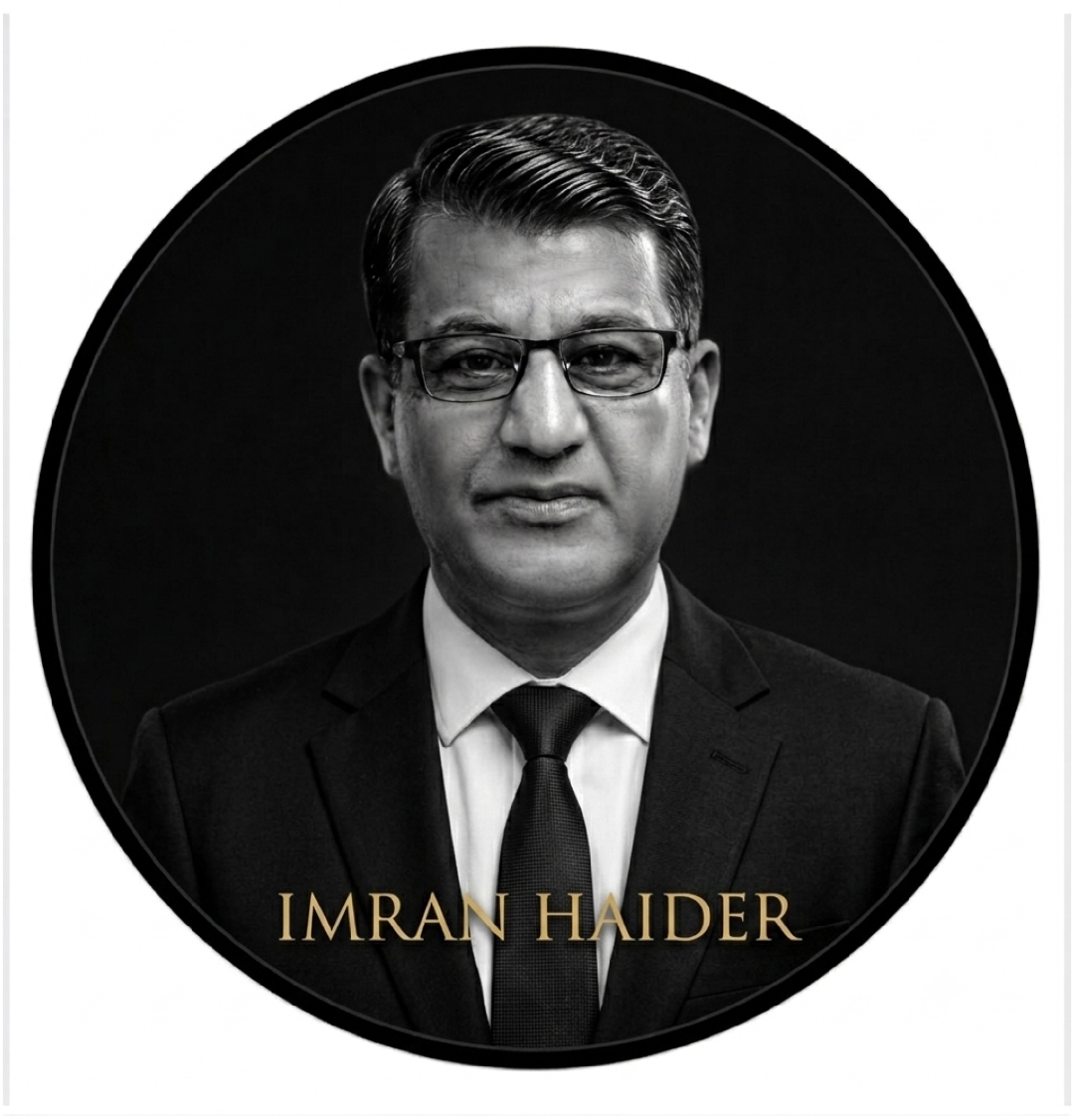 Writer: Imran Haider is a journalist known for addressing subjects that many hesitate to explore. For years, his columns have been published in both Urdu and English newspapers. His Urdu column is titled Manzil, while his English column appears under the title Destination.