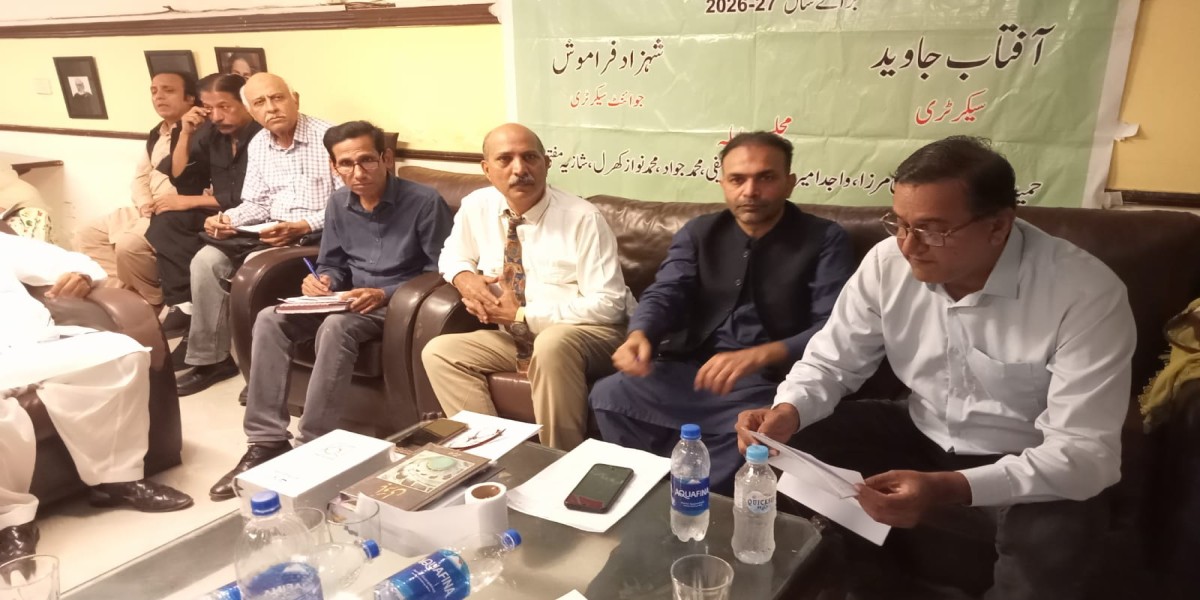
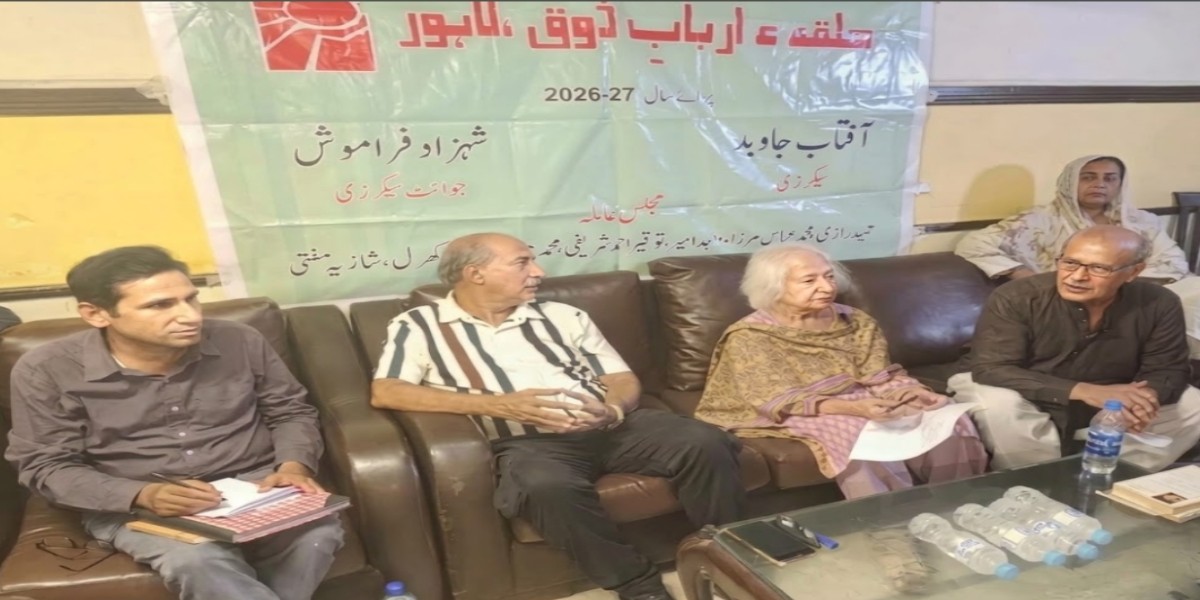
LAHORE: A special meeting of Halqa Arbab-e-Zauq was held at Pak Tea House as part of an evening dedicated to Punjabi short stories. The session was presided over by Parveen Malik, while Joint Secretary Shahzad Framosh presented the proceedings of the previous meeting.
After the proceedings were confirmed, the first session featured Zahid Hasan, who paid a glowing tribute to three prominent names in Punjabi fiction—Akbar Lahori, Anwar Ali and Afzal Tauseef.
Parveen Malik recalled her personal meetings with Akbar Lahori, Afzal Tauseef and Anwar Ali. She said that Anwar Ali had written an article on the occasion of the launch of her first book. On the very day of the book launch, Anwar Ali’s mother passed away, yet he came before the ceremony to deliver his article. She described all three writers as “great storytellers as well as great human beings.”
The second session, An Evening of Punjabi Stories, featured readings by Shahzad Framosh, who read his story “Machinaan Vich Gwaacha Banda” (A Man Lost in the Machines); Nasir Ahmed, who presented “Dhaage Saah Lainde Ne” (Threads Breathe); Samina Asma, who read “Eh Mitti Meri Nahin” (This Soil Is Not Mine); and Dr. Nasir Baloch, who presented “Choohray”.
The stories were warmly appreciated by the audience.
In her presidential remarks, Parveen Malik said that listening to the stories had been a delightful experience. She particularly praised Nasir Ahmed’s work, describing each of his stories as a new experiment and expressing her surprise at the originality of the subjects he explores.
She also appreciated Samina Asma’s story, observing that a child who grows in the womb on its mother’s blood cannot have its religion changed simply because it is born dead.
Commenting on Shahzad Faramosh’s story, she said that she liked it very much and requested him to create more stories of this kind.
Regarding Dr. Nasir Baloch’s “Chooray,” she said that the story was precise, carefully crafted and carried a powerful element of satire. She observed that a person who enters a dirty place or sewer is not the only one who can be called a choora; a person whose thoughts are filthy can also be described in the same way.
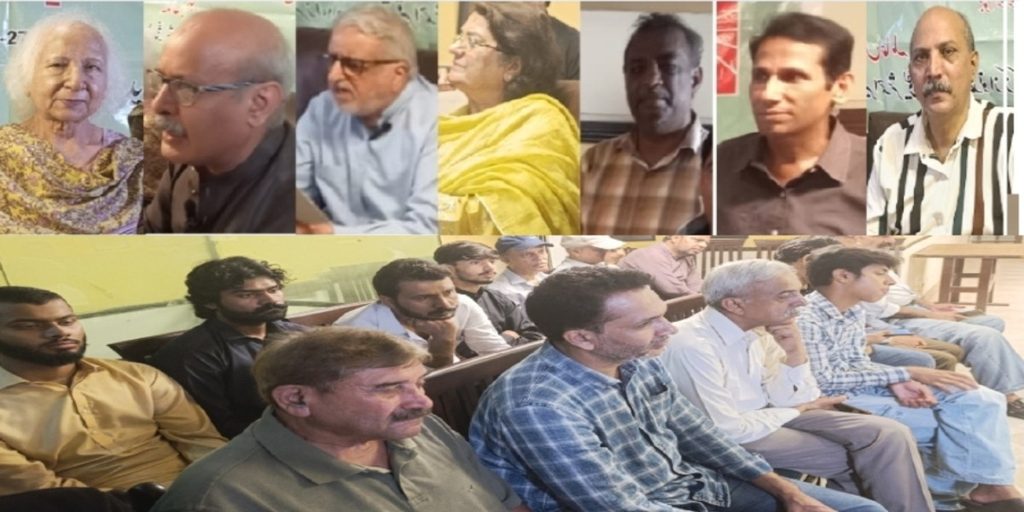
At the conclusion, Secretary Aftab Javed thanked the distinguished guests and all participants. A total of 55 people attended the session.
Reported By: Shahzad Framosh I Culture Reporter I Lahore