Pakistan’s electricity crisis is no longer merely a technical or administrative issue; it has evolved into one of the country’s largest economic, political, and social challenges. Skyrocketing electricity tariffs, massive circular debt, industrial decline, and continuous load management have severely damaged public purchasing power and industrial competitiveness.
At the heart of this crisis lies a structure known as the “Single Buyer Power System.” For years, economists, energy experts, and political parties particularly the Pakistan Peoples Party have criticized this model for creating inefficiency, monopoly, and unsustainable financial burdens.
The central question is; Why is Pakistan’s electricity structure called a Single Buyer System, why is it criticized so heavily, and what alternative model is being proposed?What Is the Single Buyer System?
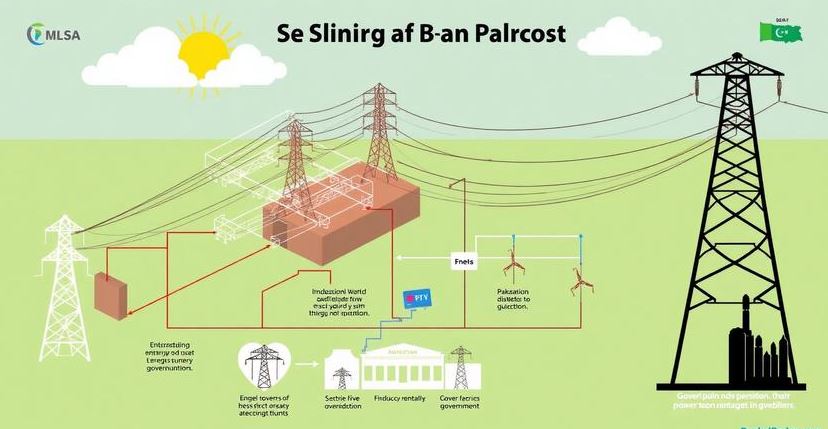
Pakistan’s electricity sector operates through a centralized purchasing mechanism. Independent Power Producers (IPPs), government-owned generation companies (GENCOs), and renewable energy projects do not directly sell electricity to consumers or industries.
Instead, a central entity CPPA-G (Central Power Purchasing Agency) purchases electricity from all power producers and then supplies it to distribution companies (DISCOs), which finally deliver electricity to consumers.
In simple terms; Power producers generate electricity,One centralized agency purchases it,Distribution companies sell it onward to consumers.This is why the model is called a “Single Buyer System” because there is effectively only one major purchaser in the market.
Under this arrangement, consumers have no choice. A citizen in Lahore must buy electricity from LESCO, one in Hyderabad from HESCO, and one in Sukkur from SEPCO, regardless of service quality, inefficiency, or overbilling.Why Is the Single Buyer System Considered Problematic?
Over time, this system has created several structural economic and governance problems that now threaten the sustainability of Pakistan’s energy sector.
Capacity Payments: Paying Even Without Electricity Consumption One of the biggest flaws of the system is the structure of contracts signed with IPPs. Under these agreements, the government must pay producers fixed “capacity payments” regardless of whether electricity is actually consumed or even generated.
This means;Electricity may not be used,Demand may fall,Plants may remain partially idle,yet the state is still obligated to make payments.Today, a major portion of electricity bills paid by ordinary Pakistanis consists not of actual electricity usage, but of capacity charges. This has become one of the primary reasons for continuously rising electricity tariffs.
Because there is only one dominant buyer in the market, real competition does not exist.When producers know that the government is guaranteed to purchase electricity, incentives for:efficiency,innovation,and cheaper productionbecome weaker.
As a result, Pakistan’s power sector gradually transformed into a heavily bureaucratic and contract-driven structure instead of a competitive market economy.
Pakistan’s DISCOs function as regional monopolies.Consumers cannot choose alternative suppliers even if:
service quality is poor,line losses are excessive,outages continueor overbilling becomes routine.In many modern electricity markets around the world, consumers can choose suppliers based on price and service quality. Pakistan’s system still operates under a closed monopoly framework.
The most damaging consequence of the Single Buyer System is Pakistan’s massive circular debt crisis.
The problem emerges when:DISCOs fail to recover payments,electricity theft increases,government subsidies are delayed,or transmission losses rise.
Consequently: DISCOs fail to pay CPPA-G,CPPA-G cannot fully pay generators,generators become indebted to banks,and the entire sector enters a vicious debt cycle.Today, Pakistan’s circular debt has reached trillions of rupees, becoming a serious threat to economic stability.Why Does the Pakistan Peoples Party Oppose This System?
The Pakistan Peoples Party has consistently criticized the Single Buyer Model on economic and political grounds.According to many PPP policymakers and energy experts, the system;creates expensive electricity,strengthens bureaucratic centralization,weakens provincial energy autonomy,and deprives consumers of market choice.
The party has repeatedly advocated;greater provincial authority in energy generation,expansion of renewable energy,competitive electricity markets,and direct power purchasing options for industries.
PPP leaders and energy policy experts argue that without competition and open access, Pakistan cannot overcome its electricity crisis.
What Alternative System Is Being Proposed? The proposed alternative is called the:Competitive Trading Bilateral Contract Market (CTBCM). This framework was introduced by NEPRA (National Electric Power Regulatory Authority) as part of broader electricity market reforms.The objective is to gradually transition Pakistan away from the Single Buyer Model toward a competitive electricity market.
How Would CTBCM Work?
Under CTBCM;Power producers could directly sell electricity to industries and large consumers,
buyers could choose suppliers,CPPA-G’s monopoly would be reduced, DISCOs would mainly function as transmission and wire companies and electricity prices would increasingly be determined through market competition.
In essence, the government would move from being a dominant trader to primarily acting as a regulator.
Potential Benefits of CTBCM.Industries could negotiate directly with lower-cost producers, potentially reducing production costs and improving exports.
Better Efficiency
Competition generally forces suppliers to improve operational efficiency and service quality.
Promotion of Renewable Energy
Solar, wind, and hydropower projects could directly participate in electricity markets, encouraging cleaner and cheaper energy generation.
Reduced Burden of Capacity Payments
Competitive markets may gradually reduce the need for expensive guaranteed contracts.Major Obstacles Still Remain Despite regulatory approval, implementation of CTBCM has been slow due to several structural challenges:existing IPP contracts,high wheeling charges,weak transmission infrastructure, institutional resistance from DISCOs,and inconsistent political commitment.
As a result, Pakistan remains trapped between an outdated centralized system and incomplete market reforms.Pakistan’s Single Buyer Power System has evolved into a centralized and monopolistic structure that continuously produces expensive electricity, rising capacity payments, growing circular debt, and declining industrial competitiveness.
This is why a growing debate exists within Pakistan over whether the country should continue with a bureaucratic monopoly-based electricity system or transition toward a competitive electricity market.
The Pakistan Peoples Party and many energy experts believe that without genuine competition, open market access, and provincial energy autonomy, Pakistan’s electricity crisis will continue to deepen with ordinary citizens and industries paying the ultimate price.
 Opninon By : Dr. Rizwan Bhayo , Lahore I May 18 ,2026