ISLAMABAD: Pakistan has again approached the United Nations, asking the Security Council to call on India to fully follow the Indus Waters Treaty (IWT) and comply with decisions made by the Permanent Court of Arbitration (PCA).
Islamabad warned that any attempt to stop, divert, limit, control or otherwise interfere with the water that the treaty gives Pakistan could have serious effects on people, the economy and regional security.
The appeal was made in a second letter from Deputy Prime Minister and Foreign Minister Ishaq Dar to UN Secretary-General António Guterres. It highlighted an August 31 PCA ruling that said the IWT remains in force and is binding on both countries.
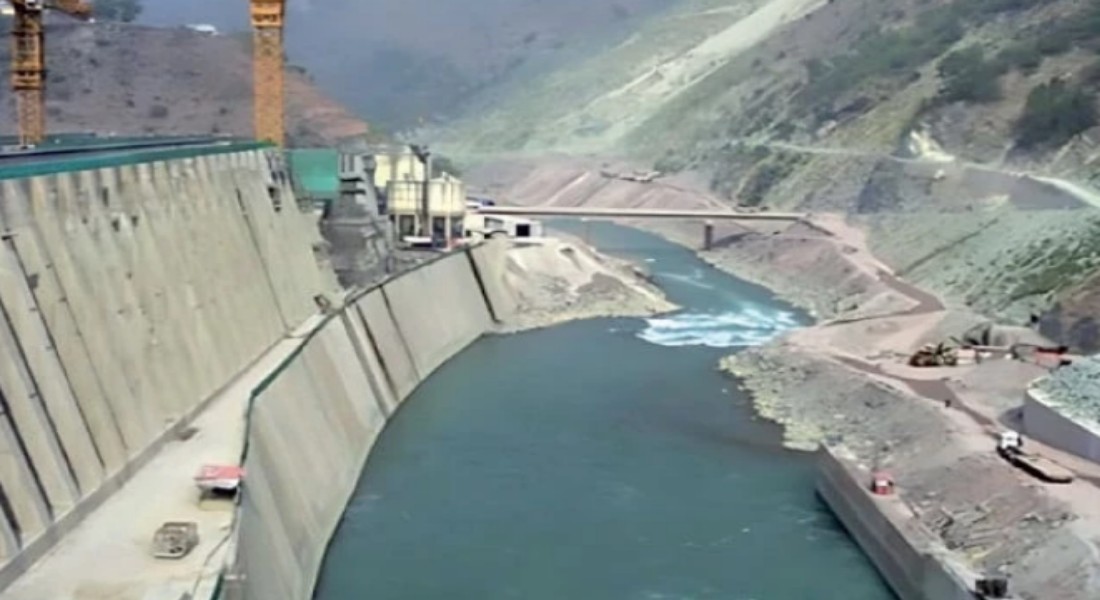
The PCA also issued a temporary order on construction at the Ratle Hydro-Electric Plant while a neutral expert decides whether the project’s design follows the treaty.
The letter asked the Security Council to address the worsening situation and call on India to follow the treaty and PCA decisions; avoid interfering with Pakistan’s treaty-guaranteed water; stop any project or action that does not follow the treaty; restart required cooperation, communication, notification, consultation and data sharing; and meet its duties under international law, including humanitarian and human rights law.
This is Dar’s second letter to the UN on the issue. He sent the first on June 17. In the latest letter, he referred to the PCA’s August 31 ruling, which said neither country could justify suspending or ending the treaty and confirmed that it remains in force and binding on both sides.
The letter also referred to the court’s separate temporary order requested by Pakistan on construction at the Ratle Hydro-Electric Plant, while a neutral expert considers whether the project’s design follows the treaty.
The court unanimously barred India from building the dam wall and power intake structure beyond set limits until 90 days after the neutral expert gives a final decision, expected in July 2027.
Pakistan told the UN that the issue was vital to the country. It said the Indus Basin supports the lives and livelihoods of nearly 250 million people and is essential to agriculture, food supplies, the economy and the environment.
“Any attempt to use water for political purposes or place it under one country’s control could have effects beyond a legal dispute between two countries. It could create serious problems for people, the economy and security across an already unstable region.”
The letter also warned that India’s refusal to accept the treaty and the decisions of its dispute-settlement bodies would set a worrying example.
It said that if a country could ignore its treaty duties for political reasons, trust in water-sharing agreements elsewhere and in the wider system of international law would be seriously weakened.
The letter said Pakistan had acted with restraint since India placed the treaty in what it called “abeyance” and remained committed to dialogue, following the law and resolving disputes peacefully, including the main dispute over Jammu and Kashmir.
However, it said Pakistan could not accept actions that put its water and food supplies, economic stability, and people’s lives and dignity at risk.
“In this connection, Pakistan’s National Security Committee has already said that any attempt to stop or divert water that the treaty gives Pakistan would be considered an act of war.”
Pakistan told the UN that India’s continuing actions, especially its position on the treaty, alleged treaty violations and construction of projects including diversion canals, required urgent attention and action by the Security Council.
It said the council should carry out its duty to maintain international peace and security and prevent the situation from getting worse.
Dar also said the international community must make clear that treaties cannot be suspended at will and shared water resources must not be used as weapons.
He added that the world must make clear that actions threatening the lives, livelihoods and food supplies of millions are against the principles of the UN Charter and international law. He said countries must not avoid their duty to follow binding decisions.
Pakistan asked for the letter to be shared as an official Security Council document under the agenda item “India-Pakistan Question.”
Reported By: Staff Reporter I Islamabad