


LAHORE: In the world of beauty and makeup, where new experiments with color blending and skincare techniques happen every day, most women frequently complain that despite applying the most expensive foundations or concealers, their makeup turns grey or dark after a short while. Furthermore, when using a TV Paint Stick at home, the base becoming cakey, settling into smile lines, and turning patchy is a common problem. To unveil the secrets behind these technical issues, principles of color theory, and waterproof full-coverage foundation, The Guider conducted an exclusive interview with renowned beauty expert Mona Kashif. Let us learn the fundamental ways to make makeup 100% flawless and long-lasting.
The Guider: Mona Ji! Women often complain that no matter how expensive the foundation or concealer they apply, after some time, the base under their eyes or on their face turns greyish or dark. What is the actual reason behind this?
Mona Kashif: The biggest and primary reason is not doing color correction. When we directly apply foundation over dark spots or dark circles without hesitation, that underlying darkness peeks through the foundation, causing the base to turn grey.
The Guider: What is the most effective and immediate solution to this problem?
Mona Kashif: The solution is the correct use of an orange color corrector. If applied properly, your base will look flawless and bright all day without deteriorating.
The Guider: How does an orange corrector actually work? What is the scientific or artistic logic behind it?
Mona Kashif: It is all the magic of color theory. If we look at the rules of the color wheel, orange always neutralizes blue, purple, and deep dark tones. Deep dark circles under our eyes, darkness around the mouth, pigmentation, or deep old acne scars have blue or dark undertones. An orange corrector cancels out all these dark and black spots, making the skin color completely even.
The Guider: Who should use an orange corrector, and when?
Mona Kashif: An orange corrector is primarily ideal for wheatish and dusky skin. If you have a medium to dark complexion with medium to heavy dark circles or blemishes on your face, an orange corrector is essential for you.
The Guider: If someone has a very fair complexion, can they also use an orange corrector?
Mona Kashif: Sisters with very fair skin should use a peach corrector instead of orange. Orange will be too dark on fair skin and will end up peeking through from under the foundation later.
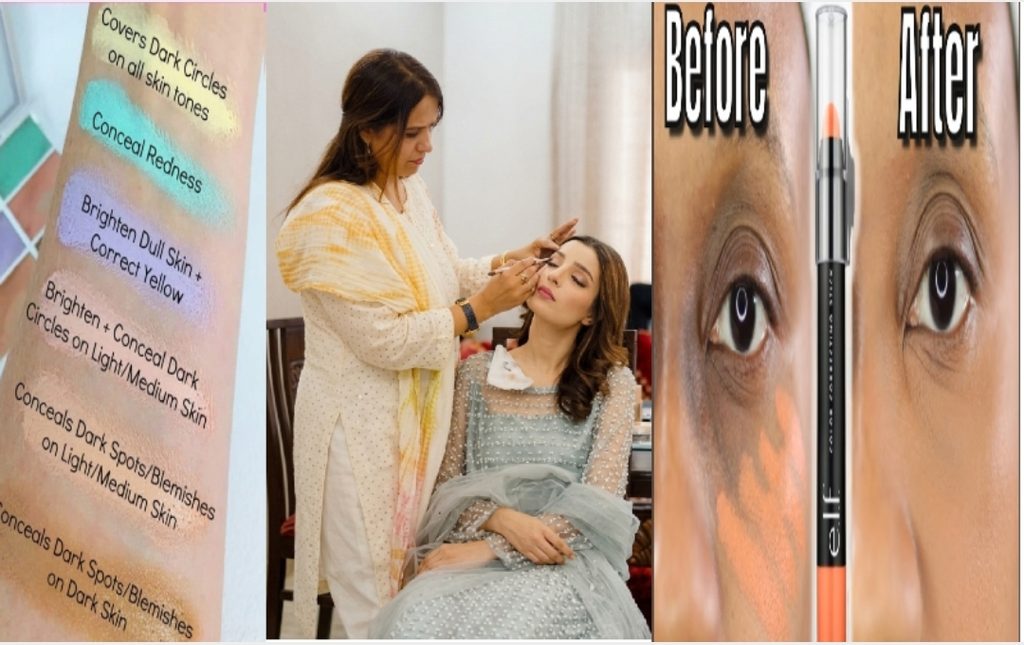
The Guider: Is there a specific technique or guideline for applying an orange corrector?
Mona Kashif: Absolutely! If you apply an orange corrector incorrectly, your whole face will look orange. There are 4 important steps for this:
Skin Prep: Apply moisturizer and primer well on the face and give it a 2-minute gap so the skin becomes smooth.
Less is More: Apply a very small amount of orange corrector just one or two dots—only on areas with dark circles, the corners of the lips, or blemishes. Never apply it all over the face.
Dab, Don’t Rub: Using a finger or a damp beauty blender, dab and blend it right in that place. Do not spread it across the entire face.
The Neutralizing Concealer (Most Important Step): Do not apply foundation immediately after applying the orange corrector. First, to hide the orange color, apply a concealer that exactly matches your skin tone or a coverage shade close to your skin tone, and gently dab it. Once the orange shade is hidden, apply the foundation.
The Guider: What common mistakes should be avoided when using an orange corrector?
Mona Kashif: Two common mistakes are often made. First, mixing the orange corrector directly with the foundation. The solution is to always dab and set the corrector first, then apply the foundation. The second mistake is applying a concealer two shades lighter directly over the orange corrector. This makes the base turn orange-grey. Apply a skin-matching concealer first, and then brighten.
The Guider: Mona Ji! When we get ready at a parlor for a wedding or function, their base looks so amazing, smooth, and waterproof that it doesn’t budge or turn dark for hours. But when we apply the same TV Paint Stick at home, the base becomes cakey and settles into smile lines. What is the parlor secret behind this?
Mona Kashif: I will share the exact special technique that will make your paint stick base completely waterproof, flawless, and 100% full coverage.
The Guider: What should be the first step?
Mona Kashif: The first and most important step is skin preparation. The formula of a paint stick is quite thick and requires heavy hydration. Therefore, hydrate the skin with a good moisturizer five minutes before applying it. After that, make sure to press primer onto the T-zone so that pores and fine lines are filled, preventing the base from settling into the skin.
The Guider: What secret application technique do parlors use when applying the stick to the face?
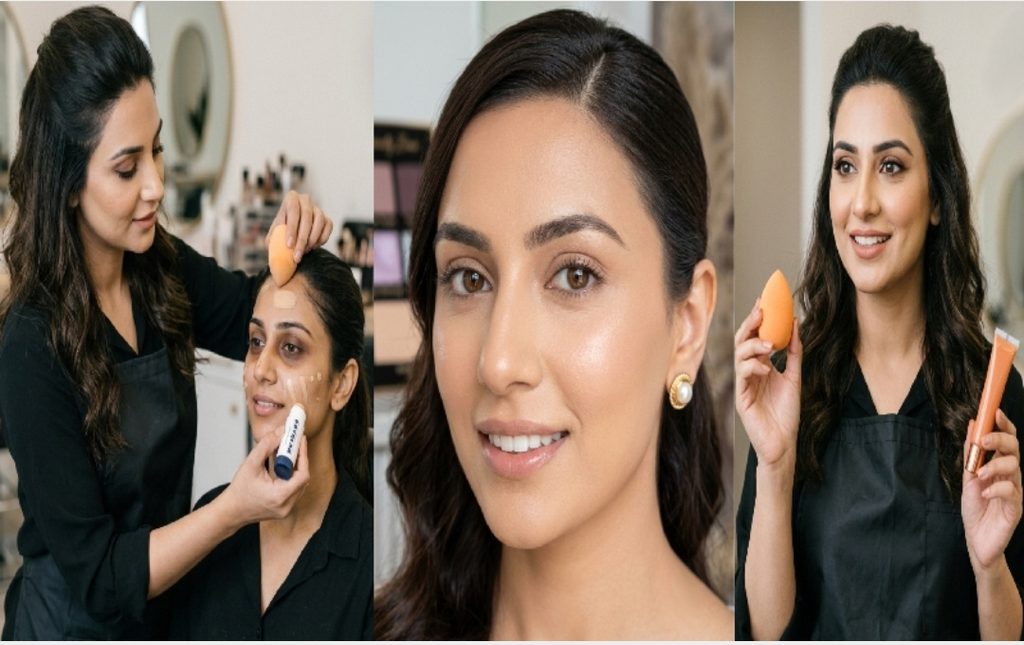
Mona Kashif: The second step is the secret parlor application technique. Instead of rubbing the stick directly onto the face, apply it in dots all over the face and neck using direct application. After that, take a damp beauty blender or sponge—soak it thoroughly in water first and squeeze out all the water—and use it for dabbing. Dab or press the base. Keep in mind that you should not drag or rub it on the face.
The Guider: How can the base be made 100% waterproof and sweat-proof?
Mona Kashif: You need to follow these steps for that:
Waterproofing: Immediately after blending the paint stick and before using powder, spray a makeup setting spray once all over the face. After that, press and lock the base using a powder puff with a good compact or loose powder.
Baking for Oily Skin: If you have oily skin or sweat excessively, leave powder on the nose, forehead, and chin for 2 minutes, and then dust off the excess powder with a large brush.
The Guider: Please tell us what mistakes should be avoided when using a TV Paint Stick?
Mona Kashif: You must avoid these two mistakes:
Applying directly on dry skin: If the skin is dry, the paint stick will look cakey, and skin patches will show.
Using too much product: Always start with a small amount. If you feel you need more coverage, an additional light layer can be applied.
The Guider: Where is your salon located, and what is its name?
Mona Kashif: The name of my salon and spa is “La Belle.” It is a French word that means “beautiful woman,” and it is located in Model Town, Lahore. On September 29, I am also delivering a lecture in class on the topics we discussed today. New learners are trained here with full attention, where we also teach techniques for applying products to the face.
The Guider: Mona Ji! You explained color correction and the correct use of the TV Paint Stick in a very simple and scientific manner. This information will surely be very useful for our readers. Thank you very much for your time and guidance?
Mona Kashif: Thank you! I hope that by following these techniques, women can achieve a parlor-like flawless look right at home.
 Interview By: Shahzad Framosh I Lahore