Understanding Cultural Festivals in Pakistan
Understanding cultural festivals in Pakistan requires looking past the vibrant colors to see them as the heartbeat of the nation’s diverse identity. These celebrations are a beautiful blend of Islamic traditions, ancient seasonal harvests, and deep-rooted regional folklore that vary uniquely from the coast of Sindh to the peaks of Gilgit-Baltistan. At their core, they are communal spaces where history is kept alive through folk music, traditional crafts, and shared feasts. To truly understand these festivals is to recognize them not just as entertainment, but as vital threads of unity, resilience, and joy that bind Pakistan’s multi-ethnic society together.
Definition of Cultural Festivals in Pakistan
Cultural festivals in Pakistan are dynamic, communal celebrations that reflect the country’s multi-ethnic, historical, and deeply spiritual identity. They are periodic gatherings ranging from religious commemorations and seasonal harvests to regional fairs that find expression through music, folk dances, traditional crafts, and indigenous sports.
These festivals act as a living archive of the distinct heritages of the Punjabi, Sindhi, Pashtun, Baloch, Kashmiri, and Gilgiti peoples, weaving them into a collective national narrative.
Significance of Cultural Festivals
The importance of these gatherings goes far beyond simple entertainment, deeply impacting Pakistan’s social, economic, and global standing.
1. Social Cohesion and National Unity
In a diverse society, cultural festivals serve as a unifying thread. Events like the annual Lok Mela in Islamabad bring together artisans, musicians, and performers from every corner of the country. By showcasing diverse regional traditions under one roof, these festivals cultivate mutual respect and a shared sense of belonging among different ethnic communities.
2. Economic Vitality and Support for Artisans
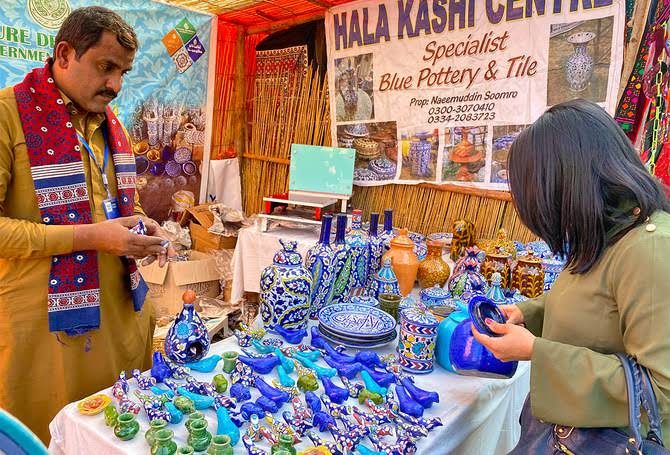
Cultural festivals are vital economic engines for local communities. As seen in the image above, large-scale exhibitions provide a direct marketplace for rural craftspeople—such as pottery makers from Hala, mirror-work embroiderers from Balochistan, or woodworkers from Chiniot—to sell their work directly to urban consumers and tourists. This sustains ancient, cottage industries and injects money directly into the rural economy.
3. Preservation of Intangible Heritage
Many of Pakistan’s historic practices are passed down strictly through oral and performance traditions. Festivals like the Shandur Polo Festival in the north keep ancient, rugged sports alive, while the seasonal Chilam Joshi festival allows the Kalash community to safeguard their unique spiritual rituals. Similarly, Sufi Urs festivals across Sindh and Punjab ensure that centuries-old mystical poetry, Qawwali, and message of peace continue to reach new generations.
4. Projecting a Soft Image Globally
On the international stage, these vibrant celebrations project a peaceful, inclusive, and culturally rich image of Pakistan. They highlight the country’s hospitality, historic depth, and artistic soul, serving as an open invitation to global travelers and counteracting one-dimensional media narratives.
Overview of the Rule these Festivals Play in Preserving and Promoting Local Heritage
Cultural festivals in Pakistan act as living museums, serving as the most effective vehicle for keeping ancient traditions alive and passing them down to younger generations. In a rapidly modernizing world where oral histories and traditional crafts risk being forgotten, these celebrations provide a regular, high-profile stage that demands the revival of local heritage.
1. Safeguarding Endangered Crafts and Arts
Many of Pakistan’s traditional crafts—such as Sindhi Ajrak block-printing, Peshawar’s copper work, or Multani blue pottery—rely entirely on knowledge passed down through generations. Festivals create an immediate economic incentive for master artisans to keep practicing and teaching these skills. Without the commercial marketplace and public recognition provided by events like the annual Lok Mela, many of these cottage industries would fade into obscurity.
2. Reviving Oral Traditions and Folk Folklore
Pakistan’s heritage is deeply rooted in oral storytelling, mystic poetry, and folk music. Cultural festivals, especially the various Sufi Urs (such as those of Lal Shahbaz Qalandar or Baba Bulleh Shah), serve as vital platforms for:
- Folk Musicians: Preserving regional instruments like the Alghoza, Rubab, and Chimta.
- Sufi Poetry: Keeping the centuries-old, peaceful messages of regional saints active in the public consciousness through live Qawwali and Dhamal.
- Storytellers: Retelling classic folklore (Heer Ranjha, Sassui Punhun) that shapes the moral and cultural identity of the region.
3. Promoting Regional Pride and Tourism
By celebrating unique localized traditions—like the Shandur Polo Festival played at the world’s highest polo ground, or the vibrant Chilam Joshi festival of the Kalash people—festivals put remote regions on the cultural map.
The Heritage Impact: This visibility transforms local customs from localized village traditions into matters of immense national pride. It encourages domestic and international tourism, proving to local communities that their unique heritage is both culturally invaluable and economically viable.
By merging preservation with celebration, these festivals ensure that Pakistan’s history doesn’t just sit in textbooks, but remains a living, breathing part of daily life.
Common Themes Found in Pakistan Cultural Festivals
While Pakistan’s cultural festivals span across completely different terrains—from the coastal breeze of Sindh to the snow-capped peaks of Gilgit-Baltistan—they are all tied together by a few deeply rooted, universal themes. No matter the region, these recurring elements form the core of every major celebration.
1. Sufism, Mysticism, and Divine Devotion
Spirituality is arguably the most dominant theme in Pakistani celebrations. The Urs (death anniversaries of Sufi saints turned eternal weddings with the Divine) are celebrated with immense fervor across the country.
- The Vibe: These festivals focus on themes of divine love, religious tolerance, and universal peace.
- The Expression: You will always find ecstatic devotional spinning (Dhamal), rhythmic clapping, and Qawwali performances that draw millions of people together, regardless of their social standing.
2. Seasonal Cycles and Agricultural Abundance
Historically tied to the land, many festivals are built entirely around the rhythms of nature, planting, and harvesting.
- Spring Welcoming: Festivals like Basant (historically celebrated in Punjab) or the Chilam Joshi of the Kalash valley are joyous expressions of welcoming spring, shedding the harshness of winter, and praying for fertile lands.
- Harvesting Joy: Festivals like Mela Chiraghan (Festival of Lights) in Lahore historically coincided with the wheat harvest, acting as a massive thanksgiving and celebration for the rural farming communities.
3. Rhythmic Folk Expressions (Music and Dance)
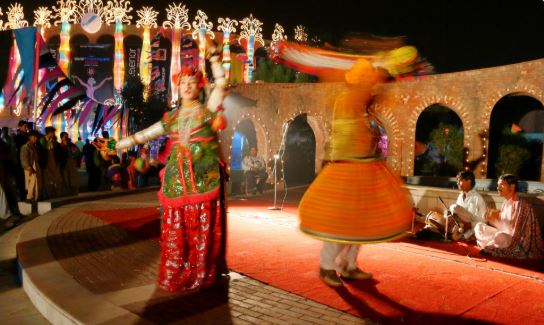
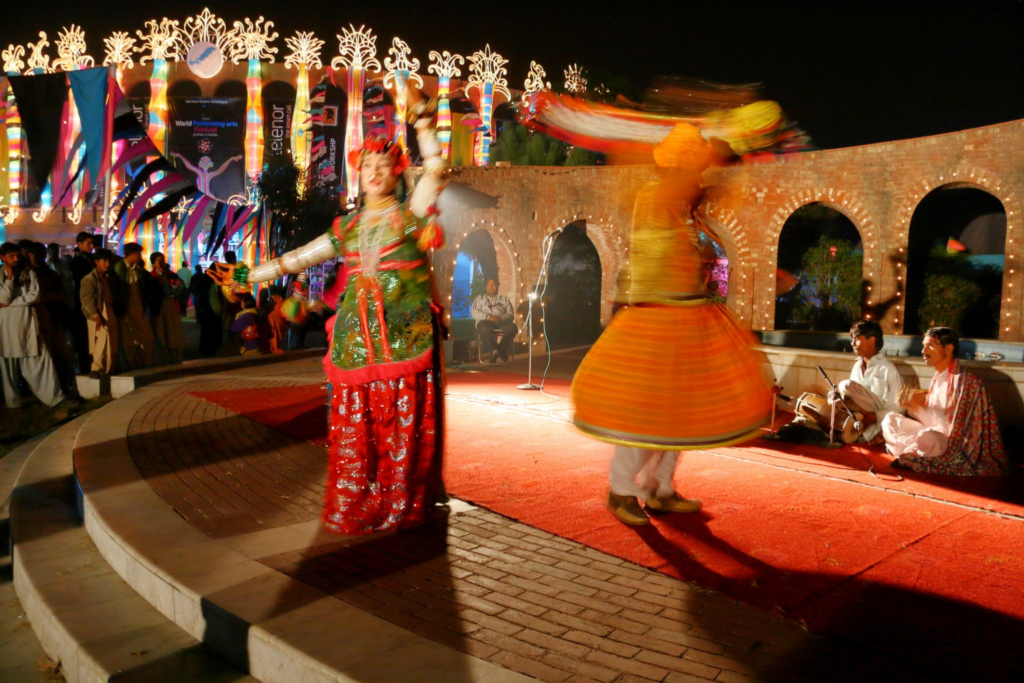
As seen in the festival performance above, music and dance are the primary languages of Pakistani celebration. They are never just passive entertainment; they are communal rituals.
- Dances: Whether it is the energetic Punjabi Bhangra, the graceful Balochi Chhap, the warrior-like Pashtun Attan, or Sindhi folk movements, dance signifies collective joy and victory.
- Instruments: The booming beat of the Dhol (large barrel drum), the haunting melodies of the Rubab, and the sharp ring of the Chimta provide a familiar, nostalgic soundtrack that instantly unites any Pakistani crowd.
4. Radical Hospitality and Commensality (Shared Feasts)
The act of cooking and sharing food on a massive scale—known as Langar or communal dining—is central to every festival theme.
- Gigantic cauldrons (Deghs) of biryani, pulao, or sweet rice (Zarda) are prepared.
- Feeding the traveler, the poor, and the neighbor serves as a practical manifestation of the festival’s underlying themes: generosity, community care, and equality.
5. Bravery, Valour, and Sportsmanship
In the rugged northern and western regions, festivals frequently center around themes of traditional sportsmanship, bravery, and ancestral pride. Events like the Shandur Polo Festival or the Sibi Mela highlight a community’s historical connection to horses, cattle, and martial arts, transforming ancient survival skills into celebrated acts of modern sportsmanship.
Top 10 Festivals You Should Not Miss
Pakistan’s cultural calendar is packed with vibrant celebrations that span mountain valleys, ancient cultural capitals, and sprawling mystic shrines. Here is a curated list of the country’s most significant cultural festivals, showcasing what makes them unique and how to experience them.
1. Lok Mela (National Folk Festival)
- Location: Lok Virsa, Islamabad
- Description: Recognized as Pakistan’s largest national celebration of folk heritage, Lok Mela brings the entire country’s diverse traditions into one central space. It features distinct regional pavilions representing Punjab, Sindh, Khyber Pakhtunkhwa, Balochistan, Gilgit-Baltistan, and Azad Jammu and Kashmir.
| Feature | Details |
| Key Feature | Live artisan workshops, authentic folk music nights, traditional regional food courts, and indigenous dance performances. |
| Cultural Significance | It is the ultimate platform for preserving endangered crafts. It provides a direct, fair-trade marketplace for rural artisans to sell their work to urban consumers, reinforcing national pride and cross-ethnic unity. |
| Community Engagement | Highly interactive. Visitors can sit with master craftsmen to see block printing, wood carving, and pottery making up close, alongside nightly folk concerts open to the public. |
| Best Time to Visit | Early November (A fixed 10-day event held annually). |
2. Shandur Polo Festival
- Location: Shandur Pass (Situated between Chitral and Gilgit-Baltistan)
- Description: Dubbed the “Rumble on the Roof of the World,” this exhilarating festival centers around traditional, freestyle polo matches played at an altitude of 12,500 feet—the highest polo ground on Earth.
| Feature | Details |
| Key Feature | High-altitude, fast-paced polo played without modern rules, surrounded by a massive temporary alpine tent city. |
| Cultural Significance | It commemorates a centuries-old rivalry and deep-seated friendship between the mountain communities of Chitral and Gilgit. It keeps the historic, rugged art of kings—freestyle polo—alive in its truest form. |
| Community Engagement | Tens of thousands of locals and travelers camp out under the stars together. The intervals between matches feature paragliding, mountain dances, and traditional folk instrumentation. |
| Best Time to Visit | Early July (Typically scheduled around July 7–9). |
3. Chilam Joshi (Kalash Spring Festival)
- Location: Kalash Valleys (Bumburet, Rumbur, and Birir), Chitral
- Description: A deeply spiritual and joyful spring festival celebrated by the indigenous Kalash people, an ancient minority community in the Hindu Kush mountains with unique customs distinct from mainland Pakistan.
| Feature | Details |
| Key Feature | Intricate, brightly colored hand-embroidered traditional dresses, unique cowrie-shell headdresses worn by women, and synchronized communal circle dancing. |
| Cultural Significance | The festival is crucial for the safeguarding of the Kalash community’s unique animist heritage. It acts as a collective prayer to thank their gods for the spring season and to protect their livestock. |
| Community Engagement | The entire community gathers in the central village dancing arenas (Natikao). Travelers are welcomed warmly to watch, listen to traditional pastoral songs, and observe their distinct courtship and marriage announcement rituals. |
| Best Time to Visit | Mid-May (Usually running from May 13–16). |
4. Mela Chiraghan (The Festival of Lights)
- Location: Shrine of Madho Lal Hussain, Lahore
- Description: A massive, centuries-old Punjabi festival commemorating the Urs (death anniversary) of the 16th-century Sufi poet and saint, Shah Hussain. It is famous for its vibrant displays of light and fire.
| Feature | Details |
| Key Feature | A giant bonfire (Alao) kept burning for three days, traditional Dhamal (mystic spinning), and public recitations of Punjabi Sufi poetry. |
| Cultural Significance | It marks the synthesis of Sufi mysticism with local Punjabi folklore. Historically, it also coincided with the onset of the spring wheat harvest, making it a festival of thanksgiving for local agrarian communities. |
| Community Engagement | People from all socio-economic backgrounds, faiths, and walks of life gather to throw oil into the central flame as a symbol of prayer, sharing free communal meals (Langar) distributed continuously over the three days. |
| Best Time to Visit | Late March (Usually the last week of March). |
Best Hubs and Regions to Find These Festivals
To catch Pakistan’s major cultural events, your travel should target three specific geographic hubs, each offering a distinct flavor of heritage:
- Lahore (The Cultural Heart): Best for massive city-scale events, religious mysticism, and traditional urban celebrations. It is the permanent home of Mela Chiraghan and various classic Sufi shrine gatherings.
- Islamabad (The Federal Capital): The primary venue for institutional cultural preservation. The Lok Mela is held here annually at the Lok Virsa complex, acting as a convenient one-stop destination to witness the crafts and music of all four provinces without traveling to remote villages.
- The Northern Highlands (Chitral & Gilgit-Baltistan): Best for rugged, ancestral outdoor events. The Kalash valleys (Bumburet, Rumbur) host the Chilam Joshi spring festival, while the towering Shandur Pass connects Chitral and Gilgit for the high-altitude polo tournament. Adventure Pakistan
Planning Your Visit: Logistics, Travel, & Accommodation
Attending these events smoothly takes careful planning due to peak tourist crowds and changing dates.
Booking & Timing
- The Lunar Shift: Remember that shrine-based events like Mela Chiraghan are scheduled by the Islamic lunar calendar. They move backward by roughly 10 to 11 days every year. Check local tourism updates beforehand.
- Advance Reservations: For fixed-date events like the Shandur Polo Festival or Chilam Joshi, lock in your transport and lodging at least 2 to 3 months in advance. Small mountain towns fill up fast.
Accommodation Strategies
- Urban Festivals (Islamabad/Lahore): You will find everything from luxury hotels to budget guesthouses. Book close to the venue (e.g., Shakarparian in Islamabad or old town areas in Lahore) to bypass heavy festival traffic.
- Mountain Festivals (Shandur/Kalash): Hotels and traditional homestays are limited. During Shandur, most attendees stay in glamping sites or temporary tent villages set up on the pass. Bring high-quality cold-weather sleeping bags, as temperatures plunge at 12,000 feet, even in the summer. Adventure Pakistan
Transportation and Access
- City Transit: Use ride-hailing apps like Indrive or Yango for safe, predictable fares within Lahore and Islamabad.
- Mountain Terrain: Accessing Shandur or the Kalash valleys requires a 4×4 jeep due to steep, unpaved terrain. You can fly from Islamabad to Chitral or Gilgit (weather permitting), then hire a local driver who knows the mountain passes well.
Local Etiquette and Cultural Norms
Respecting local customs ensures a welcoming and authentic experience for both you and the host communities.
1. Dress Code
- Modesty First: For both men and women, loose-fitting clothing that covers shoulders and knees is the standard across Pakistan. Wearing the national dress, the Shalwar Kameez, is highly appreciated by locals and is the most practical choice for hot or dusty festival grounds.
- Shrine Protocol: When entering Sufi shrines (such as during Mela Chiraghan), you must remove your shoes at the entrance. Women are expected to cover their heads with a scarf (Dupatta) inside the sacred premises.
2. Photography Guidelines
- Ask Before You Snap: Always seek verbal permission before taking portraits of individuals, especially women in rural areas. A simple nod or asking “Picture?” goes a long way.
- Kalash Exception: While the Kalash people are famous for their vibrant attire, avoid pushing cameras directly into dancing circles or private rituals. Treat their religious spring celebrations with the same respect you would show any sacred service.
3. Social Interaction & Generosity
- Accepting Hospitality: Pakistani hospitality is legendary. Do not be surprised if a local family invites you for tea or shares their festival meal with you. Accepting this warmth politely is a cornerstone of building connection. Adventure Pakistan
- Gender Dynamics: In conservative settings, avoid initiating physical contact, like handshakes, with members of the opposite sex unless they extend their hand first. A warm smile and placing your right hand over your heart is the traditional, universally polite way to greet someone.
The Impact of Festivals on Local Communities
The impact of cultural festivals on local communities in Pakistan extends far beyond temporary entertainment. These celebrations act as vital social and economic stabilizers, creating opportunities for grass-roots development, communal healing, and the direct survival of ancient heritages.
1. Socio-Cultural Impact: Unity and Identity
In a country shaped by distinct regional and ethnic identities, festivals offer a rare space where diverse communities actively interact, build empathy, and celebrate a shared Pakistani identity.
- Fostering Regional Pride: Festivals allow marginalized or isolated rural communities to showcase their customs on a national platform. This visibility transforms local practices from overlooked regional traditions into matters of immense national pride.
- The Dissolution of Social Barriers: Massive public celebrations become great social equalizers. During regional gatherings, societal divisions based on wealth, caste, or background fade away as people participate in the same communal spaces.
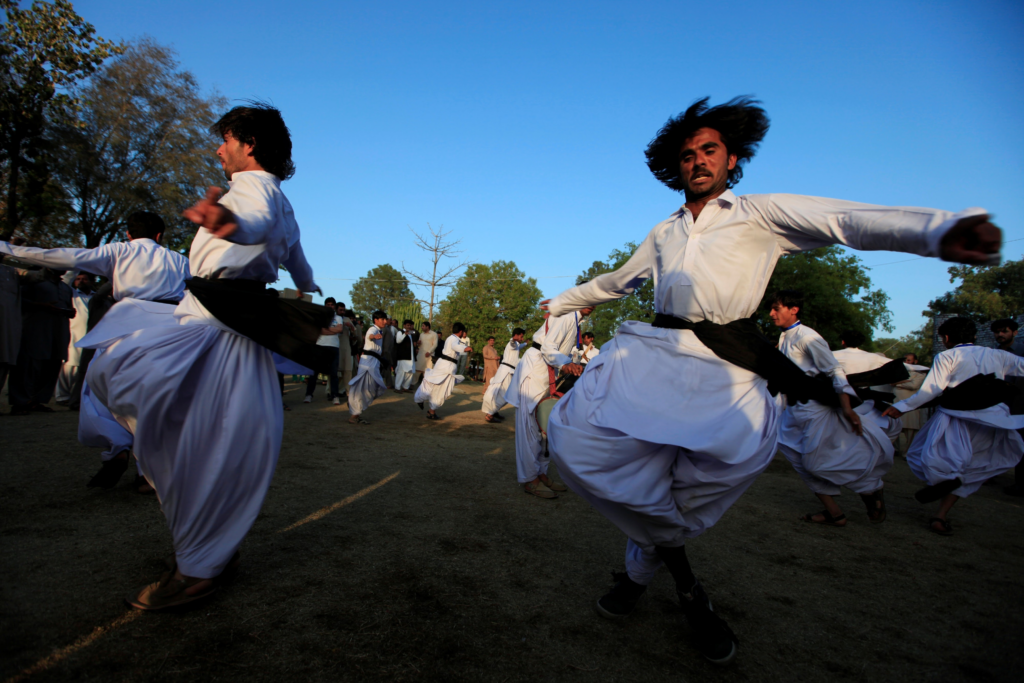
As seen in the image above, traditional dances like the Attan or Bhangra are not just performances—they are communal rituals requiring synchronization and collective movement, embodying the spirit of cooperation.
2. Economic Impact: Empowering the Grassroots
Festivals function as powerful micro-economic lifelines, injecting cash directly into local economies and protecting sustainable cottage industries.
- Direct Marketplace for Rural Artisans: Annual exhibitions act as a bridge between remote villages and urban wealth. Craftspeople sell directly to consumers without exploitative middle-men, often securing enough income in a single festival week to support their households for months.
- The Tourism Multiplier Effect: High-profile regional events bring a wave of capital into local hospitality sectors. Money spent on 4×4 jeep rentals, local tour guides, food stalls, and traditional homestays flows directly into the pockets of area residents.
- Infrastructure Incentives: To support the influx of visitors for annual celebrations, provincial governments are frequently driven to pave roads, improve cellular networks, and develop eco-tourism facilities in otherwise neglected areas.
3. Psychological and Spiritual Impact: Resilience and Solace
Against the backdrop of modern economic and social pressures, festivals provide a necessary psychological release valve for local communities.
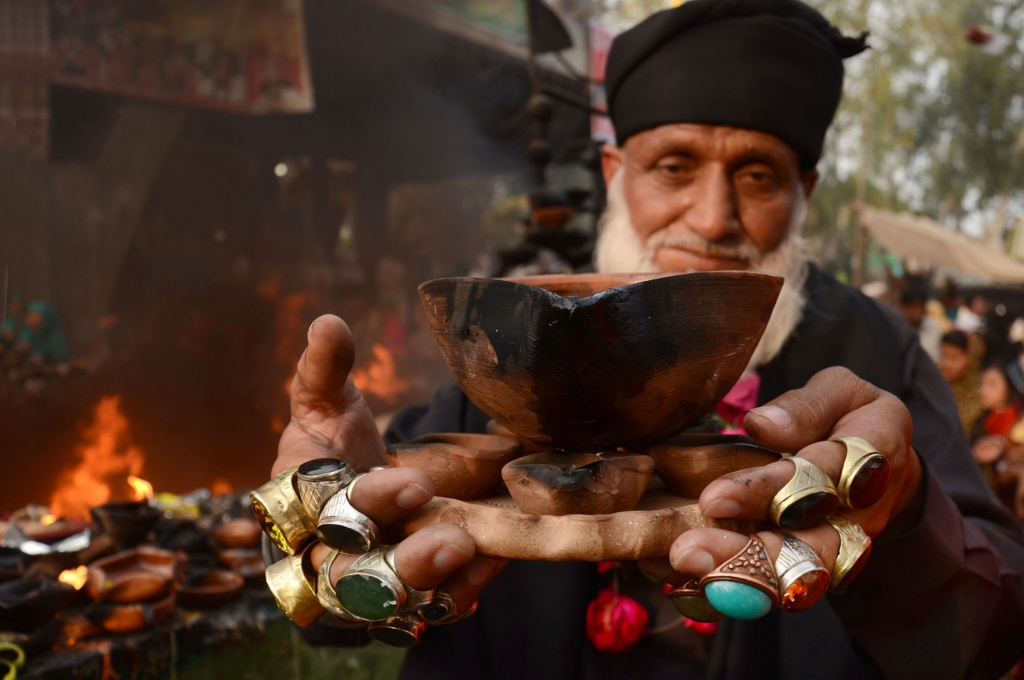
- Sufi Shrines and Communal Peace: Mystical gatherings at Sufi shrines offer deep spiritual comfort. The performance of ecstatic Dhamal (spiritual spinning) and Qawwali allows attendees to process grief and stress within a supportive, communal setting.
- Radical Hospitality (Langar): The tradition of preparing massive, around-the-clock communal kitchens during these events ensures that no attendee goes hungry. Feeding the traveler and the neighbor serves as a practical manifestation of community care and mutual support.
Economic Benefits to Local Communities
Cultural festivals in Pakistan serve as powerful micro-economic engines, especially for rural and remote areas where traditional economic opportunities may be limited.
- Direct Marketplace for Rural Artisans: Events like the Lok Mela act as a critical bridge between remote villages and urban wealth. Craftspeople—such as weavers from Hala or gemstone cutters from Gilgit—can sell their work directly to consumers without exploitative middlemen, often earning enough in a single 10-day festival to sustain their households for several months.
- The Tourism Multiplier Effect: High-profile events like the Shandur Polo Festival inject massive amounts of capital into local hospitality sectors. Money spent on 4×4 jeep rentals, local tour guides, food stalls, horse feed, and homestays flows directly into the pockets of valley residents.
- Infrastructure Growth: To accommodate the influx of tourists for annual festivals, provincial governments are frequently incentivized to pave roads, improve cellular networks, and develop eco-tourism facilities in otherwise neglected regions.
The Power of Community Spirit and Participation
The true heartbeat of any Pakistani festival is its deep sense of volunteerism and communal care, a concept often referred to locally as Milaap (togetherness).
The Ultimate Example: The Communal Kitchen (Langar)
At major Sufi festivals like Lahore’s Mela Chiraghan, the social divisions of wealth, class, and sect completely dissolve. The community comes together to run massive, around-the-clock kitchens.
Local neighborhoods organize Chanda (crowdfunded donations) weeks in advance. Wealthy businessmen donate sacks of rice, while local laborers volunteer their time to stir massive copper cauldrons (Deghs). Everyone sits on the floor together to eat, exemplifying an extraordinary spirit of radical equality and collective responsibility.
In the north, during the Kalash Chilam Joshi festival, community spirit is shown through collective pastoral duties. Neighbors help milk each other’s cattle and distribute the dairy products evenly across the village as a symbol of unity and shared prosperity.
Challenges Faced by Organizers and How They Overcome Them
Managing events that draw tens of thousands of people into tight urban spaces or fragile mountain ecosystems presents major logistical hurdles.
+------------------------------------+------------------------------------+
| Challenge                          | How Organizers Overcome It         |
+------------------------------------+------------------------------------+
| 1. Unpredictable Lunar Dates       | Shifting to hybrid calendars. While|
| Shrine festivals move 10–11 days   | the spiritual rituals follow the   |
| earlier every year, messing up     | moon, organizers set fixed secular |
| seasonal tourism planning.         | tourism windows nearby.            |
+------------------------------------+------------------------------------+
| 2. Crowd Control & Security        | Layered security and community-led |
| Managing crowds of over 100,000    | watch groups. Organizers partner   |
| people at historic, tight venues   | with local youth volunteers who are|
| like Pak Tea House or old shrines. | trusted by the crowds to guide     |
|                                    | traffic smoothly.                  |
+------------------------------------+------------------------------------+
| 3. Environmental Degradation       | Eco-camping and plastic bans. At  |
| Festivals like Shandur face severe | high altitudes, local authorities  |
| trash and pollution issues from    | now mandate "Leave No Trace" tents |
| temporary alpine cities.           | and hire local youth cleaning teams|
|                                    | post-festival.                     |
+------------------------------------+------------------------------------+
Digital Preservation: Overcoming the Threat of Modernization
As younger generations move toward digital entertainment, organizers face the challenge of keeping ancient folk arts relevant. To combat this, cultural bodies like Lok Virsa have begun aggressively integrating digital streaming, social media storytelling, and live-podcasting booths directly into festival grounds. By turning master artisans into viral creators, they ensure that traditional heritage captures the imagination of Pakistan’s massive youth demographic.
Written by : Web Desk I Lahore