Certainly. Here is a polished English translation of the complete review, preserving its literary and academic tone.
Rai Bahadur Ram Saran Das of Lahore: My Grandfather Whom I Never Knew
Writer: Nilima Lambah
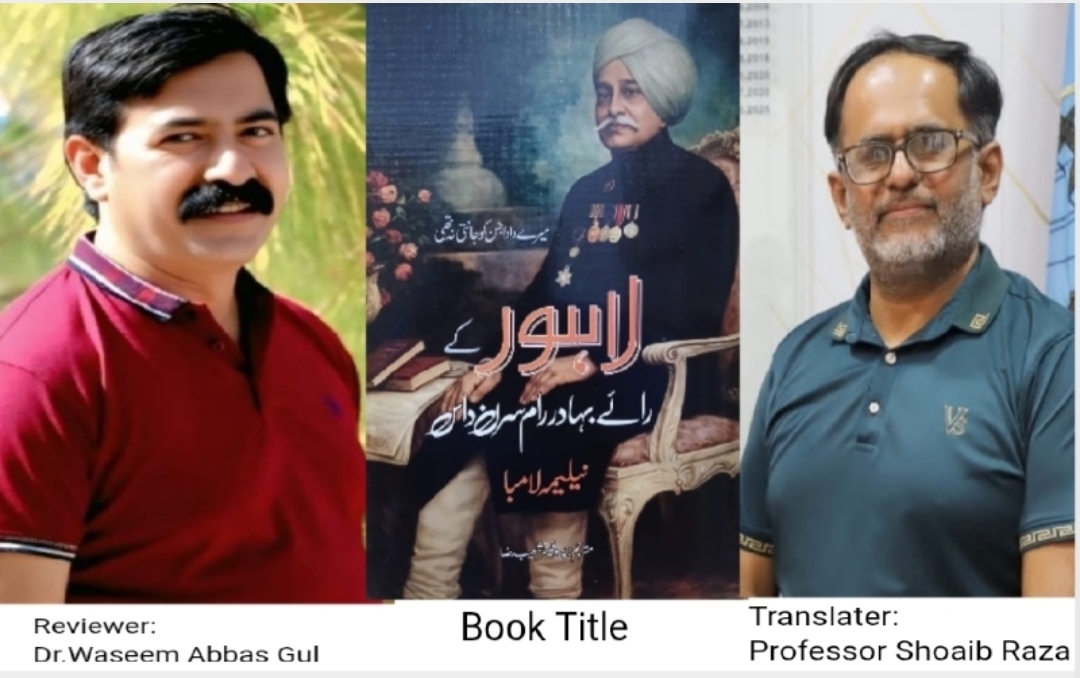
Translator: Shoaib Raza
Reviewer: Dr. Wasim Abbas Gul
Translations of historical books serve to transfer historical events, personalities, and cultural conditions from one language to another. Translating historical works is a sensitive and responsible task, because a translator must convey not merely words, but also the historical context, terminology, culture, and the author’s original meaning into another language. Translations of historical books enable people belonging to different nations and linguistic traditions to learn about one another’s history and civilization. They also make it possible to benefit from historical material preserved in other languages.
Rai Bahadur Ram Saran Das of Lahore: My Grandfather Whom I Never Knew, written by Nilima Lambah, is an important and rare historical document that encompasses the historical, political, social, and cultural life of the city of Lahore.
The book is a collection of memories associated with a distinguished businessman and prominent social figure of the British period who lived in Lahore before the Partition of India. These memories have been recorded by his great-granddaughter in remembrance of her great-grandfather.
It is a lament for memories, relationships, social identity, and a family that, like countless other families that were uprooted and disappeared, was destroyed by the riots of 1947. It is the story of a family that, before the riots, stood as a champion of humanitarianism and social welfare in Lahore. The surviving traces of its contribution can still be seen on the pages of Lahore’s history—in the zoo established in Lahore by Lala Mela Ram, WAPDA House, Mela Ram Building, and the famous pond near the railway station.
It is a heartrending cry arising from the tragedy of the division of human lives and communities, which Nilima Lambah has transformed into a compelling narrative.
Nilima Lambah’s book consists of ten chapters and four appendices. The original text of the book is in English. It was published in Delhi in 2020 and focuses on the life, personality, and services of Rai Bahadur Ram Saran Das.
Professor Shoaib Raza has translated this important historical document into Urdu with great skill under the title Rai Bahadur Ram Saran Das of Lahore: My Grandfather Whom I Never Knew.
The cover of the book features a beautiful photograph of Rai Bahadur Ram Saran Das. The back flap carries the views of prominent personalities, including Pranab Mukherjee, President of India, and K. Natwar Singh, former Foreign Minister of the Government of India. Reviews and notes from Pakistani and Indian newspapers and journals are also reproduced, including The Indian Express (7 December 2008), The Hindu (2 November 2008), The Hindu (5 April 2009), Indian Foreign Affairs Journal (January–March 2009), and Dawn, Pakistan (8 February 2009).
The Urdu edition has been published from Lahore in 2026 by Lahore Shanasi Publications.
Before translating a historical book, a translator must undertake a thorough study of the original work. Historical events, names, places, dates, and terminology require careful research. During translation, the translator must preserve the meaning of the original text and the author’s style while presenting it in the target language in a fluent and comprehensible manner. Difficult historical terms also require explanatory notes and annotations.
Accuracy, integrity, fluency, and clarity are the fundamental qualities of a good historical translation. Keeping all these standards in view, I congratulate Professor Shoaib Raza on this scholarly endeavour and regard his achievement as highly commendable and worthy of appreciation.
Historical translations play an important role in the advancement of scholarship and research. They strengthen international intellectual exchange, promote mutual understanding among different civilizations, and enable younger generations to develop a better understanding of their own past as well as the history of the wider world.
Thus, high-quality translations of historical works provide an effective means of preserving our intellectual heritage and transmitting it from one generation to another. There is no doubt that Professor Shoaib Raza’s achievement constitutes an important chapter in Urdu research and translation. It will serve as a valuable guide for researchers and readers alike and will help open new doors to knowledge.
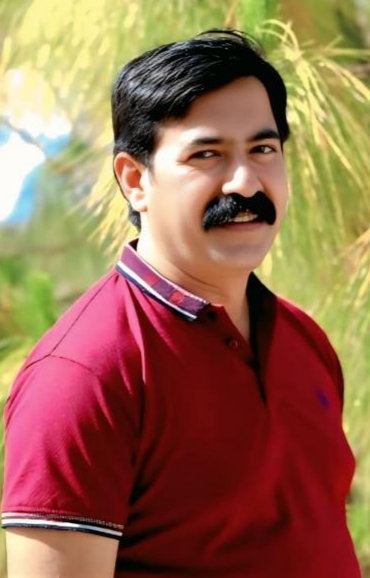 Reviewer: Dr. Wasim Abbas Gul